
A woman’s beauty is a hard currency: women who are considered beautiful enjoy significant social and material benefits. But beauty is also culturally constructed, with each culture setting its own standards for what is considered beautiful. This is reinforced through music, media, fashion and politics. Culture itself, though, is not static – it evolves, through greater understanding of ourselves and, crucially, who we want to be – but also through a better understanding of the world that we inhabit. For decades, centuries, even, Black women have endured a race-based hierarchy of beauty in which they are treated as inferior to their non-Black counterparts. Even today and regardless of qualification, it is not uncommon for women who are perceived to have the right kind of beauty to be promoted above their darker, more qualified sisters. And in a digital age, the repercussions are laid bare before the world. But is the Eurocentric standard of what is deemed beautiful changing?
The bad old days
You might not have heard about the 1605 story of a Danish woman who donned black face and black body and a sexually provocative costume to perform before her husband and his mates. She was impersonating one of 12 African nymphs who were ‘distressed’ by their ‘ugly blackness’ and wanted to be ‘whitened’ into beauty by means of the ‘heliocentric symbolism of monarchy’, ie her husband’s (masculine) White royal agency would be the power by which such a supernatural task could be performed. The woman in question was Queen Anne of Denmark, and her husband, James VI of Scotland, whose regal light on the African nymphs would supposedly make them White and, thus, beautiful:
“Yield, night, then, to the light,
As blackness hath to beauty,
Which was but the same duty.
It is for beauty that the world was made,
And where she reigns Love’s lights admit no shade.”
And what are we to make of poor old Black South African Saartjie (Sarah) Baartman? Born in 1789, Baartman was thought by White people to have a bottom that was ‘unnaturally large’ despite the fact that her body was similar to the bodies of other women in her community. Her punishment for her body being as it was? To be exhibited as a freak show attraction.
Nothing new under the sun
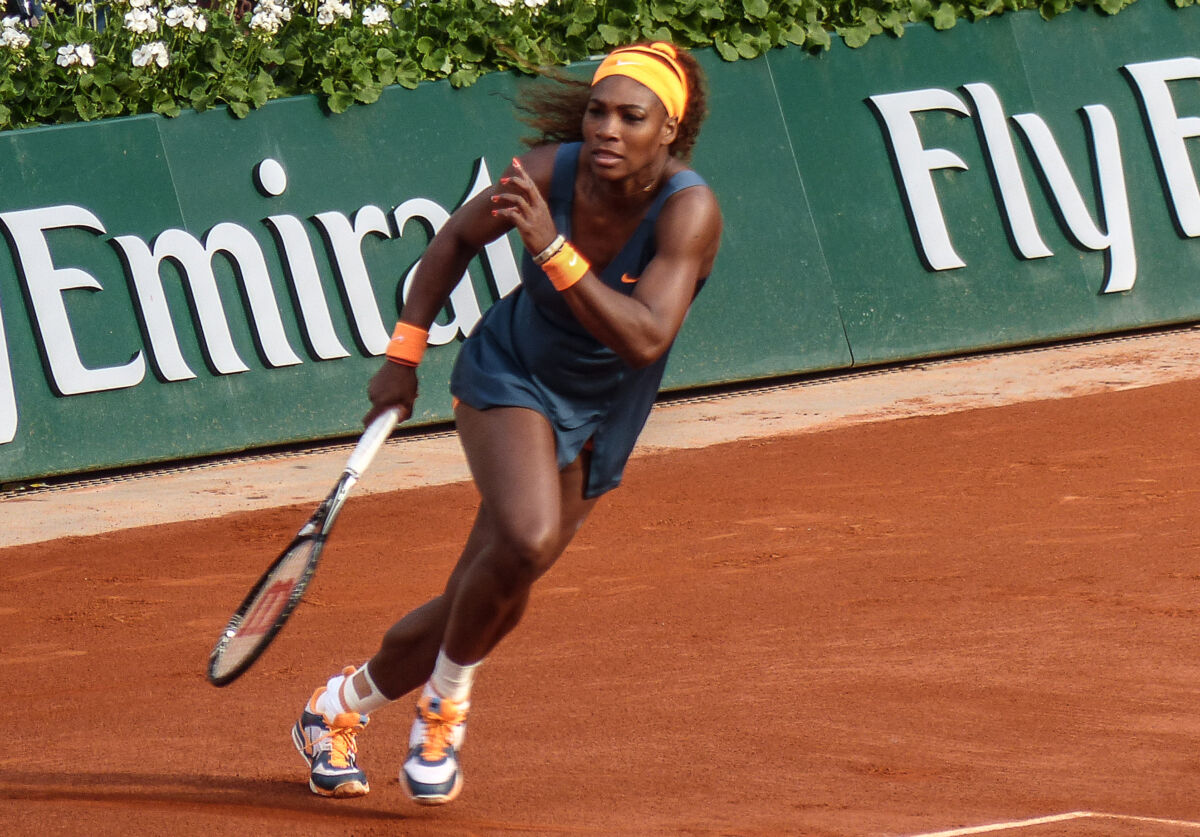
The world’s favourite GOAT (Greatest Of All Time) tennis player Serena Williams had to deal with a similar absurdity from the apotheosis of beauty herself, Maria Sharapova, who felt it was OK to publicly body shame her opponent.
A while back I came across a tweet by a Twitter troll sent to the former American president’s most famous Black supporter, Candace Owens. Owens had shared a picture of her new born, mixed-race child with her Twitter followers, only to be shot at with a scathing response from the aforementioned troll: Candace’s baby would ‘never be beautiful’ because she lacked Caucasian features. On what planet is that OK?
On a separate occasion, a stunning Black model shared that she had booked herself in for a nose-job. Why? Because she was told by her model agent that the number one barrier she faced to having a successful career was that her nose was ‘too African’.
First racism, then colourism
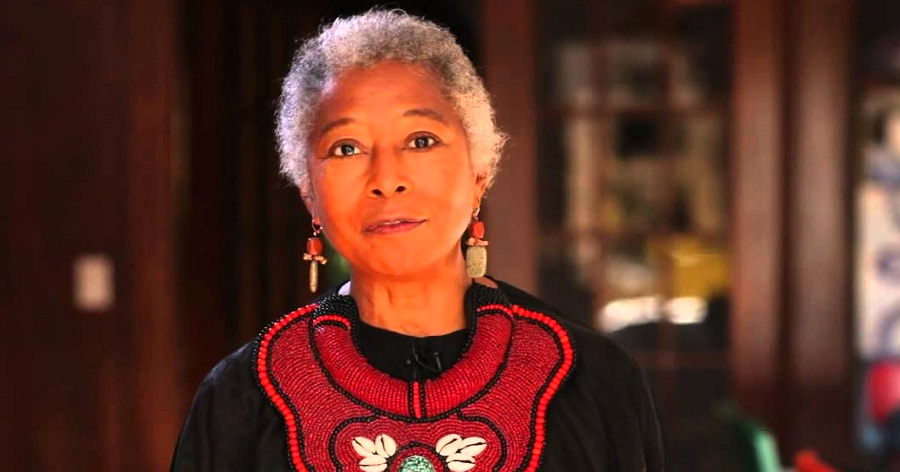
Colourism is racism’s baby sister. This dictionary definition spells it out: ‘prejudice or discrimination against individuals with a dark skin tone, typically among people of the same ethnic or racial group’.
And don’t tell, but it’s the Black community’s dirty little secret. We just don’t like to talk about it. It hurts too much.
Some context to the colourism issue: mass rape by White slave masters of their slaves led to cohorts of light-skinned baby girls who, as women, were given preferential treatment, for example not having to work in the fields or do back-breaking work etc. Today, we see light-skinned women being promoted above their darker, more qualified counterparts. The point is that it is the approximation of white skin (and Caucasian features) that is valued, even today.
In Africa generally, the skin bleaching industry is worth billions, so desperate are consumers to conform to the Eurocentric notions of beauty, ie light, not dark skin. Bleaching is practiced across classes, ages, genders and education profiles, but the common denominator is that those who participate in it live in societies where the assumption that light skin means intelligence, beauty and being generally more marketable is entrenched, as this recent BBC podcast on the issue reveals. And this is despite the well-known dangers of skin bleaching, such as cancer. There are literally huge billboards advertising skin bleaching products, all over the continent. In some communities, parents will bleach the skin of their daughters from as young as the age of 8, so that their children can be perceived as valuable and beautiful by their communities. According to a 2018 research paper by Harvard University:
- 77% of women in Africa, Asia, and the Middle East use skin lightening cream. (A separate study reported that up to 40% of women in Africa use skin bleaching products: injections, creams, you name it –all full of hazardous chemicals)
- The skin lightening industry will be worth $31.2 billion by 2024
French-Malian hit singer Aya Nakamura told Dazed magazine that she had been advised to by ‘the industry’ to bleach her skin in order to “reach a wider audience”. She recalled feeling “stunned for a while”, and that it made her “realise this business was going to be really tough for a dark-skinned woman like me.”
Watch this heartbreaking trailer on this most awful form of racism – from the documentary, Dark Girls:
There are far too many stories of Black women being told by Black men that they aren’t datable due to the darkness of their skins. (Here’s a fun exercise: think about all the high profile Black men in the UK today. How many are married to dark-skinned women, as opposed to white or light-skinned Black women? Exactly. But we’ll leave that for another article.) According to the Journal of Economic Behaviour and Organisation, light-skinned women are more than twice as likely to be married as dark-skinned women. A recent study by Duke University found that Black women who wear natural hairstyles are less likely to get job interviews. The study participants deemed natural hairstyles to be ‘unprofessional’. And there are also far too many stories of Black women whose self-loathing, as a result of their blackness, leads them to crushing levels of low self-esteem, and, in some cases, suicide.
A particularly egregious example of colourism is the now infamous ‘Straight outta Compton’ film casting call. The studio for the film ranked women from categories A to D as follows, with category D being the least desirable (the outrage that ensued led to the casting specifications being changed):
Via Huff Post
“SAG OR NON UNION FEMALES – PLEASE SEE BELOW FOR SPECIFIC BREAKDOWN. DO NOT EMAIL IN FOR MORE THAN ONE CATEGORY:”
[Emphasis mine; note the period in category D after ‘African American girls’.]
“A GIRLS: These are the hottest of the hottest. Models. MUST have real hair – no extensions, very classy looking, great bodies. You can be black, white, Asian, and Hispanic, mid eastern or mixed race too. Age 18–30. Please email a current color photo, your name, Union status, height/weight, and age, city in which you live and phone number to: SandeAlessiCasting@gmail.com subject line should read: A GIRLS
B GIRLS: These are fine girls, long natural hair, really nice bodies. Small waists, nice hips. You should be light-skinned. Beyonce is a prototype here. Age 18-30. Please email a current color photo, your name, Union status, height/weight, age, city in which you live and phone number to: SandeAlessiCasting@gmail.com subject line should read: B GIRLS
C GIRLS: These are African American girls, medium to light skinned with a weave. Age 18-30. Please email a current color photo, your name, Union status, height/weight, age, city in which you live and phone number to: SandeAlessiCasting@gmail.com subject line should read: C GIRLS
D GIRLS: These are African American girls. Poor, not in good shape. Medium to dark skin tone. Character types. Age 18–30. Please email a current color photo, your name, Union status, height/weight, age, city in which you live and phone number to: SandeAlessiCasting@gmail.com subject line should read: D GIRLS”
This disastrous call by the studio evokes the twentieth century brown paper bag test that was used within African American communities. The test was used within the African American community to discriminate against dark-skinned African Americans by admitting only lighter-skinned individuals into social events.
Even today, in Hollywood, Nollywood and Bollywood, you’ll notice that the main female protagonist in movies is typically played by a lighter skinned woman; by contrast, her sidekick is invariably a woman with darker skin.
Yet the unvarnished truth is that centuries of enslavement have created a social hierarchy that has engraved an extremely deep psychological scar that is still manifesting today. This leads to all manner of trauma, inner turmoil and dangerous practices. Some of you reading this might have read about the ‘Gorilla Glue’ saga, whereby a young African American girl, Tessica Brown, used industrial-strength glue purchased from a hardware store (Gorilla Glue) to make her hair straight. Tessica Brown posted a video on Tik Tok, showing her (after the glue application) rock-solid hair stuck onto her scalp, despite her efforts to wash the glue from her hair. She deserves our sympathy.
Here’s the video:
https://www.youtube.com/watch?v=PDfz_16Td4E&ab_channel=JosephMorris
Society’s ideal beauty standard
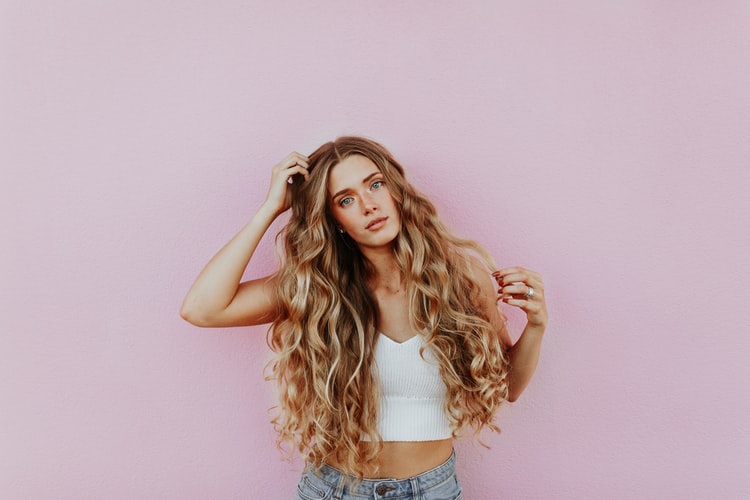
The mainstream fashion and media industry in the West have long perpetuated the narrow idea of the ideal beauty as having white skin, long, blonde hair, a slim nose. In other words, Caucasian.
Disney princesses are White with long flowing hair and dolls have blonde hair and blue eyes. Magazines, billboards, TV programmes and films send the crude message that light skin is good, dark skin is bad. In 2014, the actress Lupita Nyong’o revealed that she used to pray for lighter skin. Throughout her childhood, she learned that her “night-shaded” complexion was “an obstacle to overcome”.
Celebrities of colour are routinely photo shopped to make their skin lighter when featured in magazines.
The photographer An Lee had to apologise when he retouched Nyong’o’s natural hair for the cover of Grazia UK’s November 2017 issue. She reacted angrily on her Instagram account that being on a magazine cover was a chance to “show other dark, kinky-haired people, particularly children, that they are beautiful just as they are.” She added:
“Natural African, kinky hair – it’s often been painted as uncivilized and wild.”
For castings, I was labeled ‘ethnically ambiguous’… To this day, my pet peeve is when my skin tone is changed and my freckles are airbrushed out of a photo shoot.
Meghan Markle, Allure Magazine
Between 2000 and 2005, only three of the 81 Vogue cover models were Black, and all of these women had light skin: Marion Jones, Halle Berry and Liya Kebede. In 2014 and 2015, less than two out of ten magazine cover stars were ‘people of colour’. This increased to 35 per cent in 2016, plateauing in 2017 at just over 30%. From Vogue cover models from over the last two decades, it’s clear that at the darkest end of the spectrum, 60 per cent of the cover models (three of them) featured just one model: Lupita Nyong’o – meaning that the *very same woman* is being portrayed; yet on the lightest end of the spectrum, we see diverse faces. Whilst it is certainly true that today there is more diversity in terms of race within magazines, until very recently such ‘diversity’ meant a preponderance of very light skinned, Meghan Markle types, with dark models being limited to those very few individuals with supermodel/superstar status, such as Naomi Campbell, who herself has railed on numerous occasions against this issue.
“Designers have told me, ‘We already found one Black girl. We don’t need you anymore.’”
The model Chanel Iman, Times
The complicity of the beauty industry
In an article for the Guardian newspaper, beauty columnist Funmi Fetto writes:
“Despite being British, I parked any expectation to be included in this beauty industry. It never occurred to me that I could be a part of this world…”
In a poignant recounting, she describes the first time she “realised” she was Black – a visit to a pharmacy with friends to try on the makeup offerings. Fetto tried on the darkest shade of foundation available, which she says left her looking like she had white chalk on her skin. Internally, at the time, she felt “irrelevant, excluded and ashamed.”
Importantly, she calls out the dearth of products available that cater for black skin, noting that “most beauty journalism still assumes that readers are White.” It is this thinking that dismisses, marginalizes and excludes entire communities of Black British consumers. Most skincare brands are making scant efforts to address this gap in their manufacturing – baffling, given that even if they don’t feel a moral imperative to redress this wrong, it presents them with a huge financial opportunity: according to a Nielsen report in the US, Black women outspend their white counterparts, by some margin, on hair and beauty.
Defining beauty
Beauty isn’t defined by models such as Gigi Hadid or Naomi Campbell. Or by the so-called beauty industry.
Beauty is far too important a concept to be defined by ‘society’. It must be experienced by the beholder.
Think on these two quotes by the philosopher Roger Scruton (From Beauty: A Very Short Introduction):
“When I put my trust in a critic, this is tantamount to saying that I defer to his judgment, even when I have made no judgment of my own. But my own judgment waits upon experience. It is only when I have heard the piece in question, in the moment of appreciation, that my borrowed opinion can actually become a judgment of mine.”
And this one:
“Beauty can be consoling, disturbing, sacred, profane; it can be exhilarating, appealing, inspiring, chilling. It can affect us in an unlimited variety of ways. Yet it is never viewed with indifference; beauty demands to be noticed; it speaks to us directly like the voice of an intimate friend. If there are people who are indifferent to beauty, then it is surely because they do not perceive.”
Seeds of change
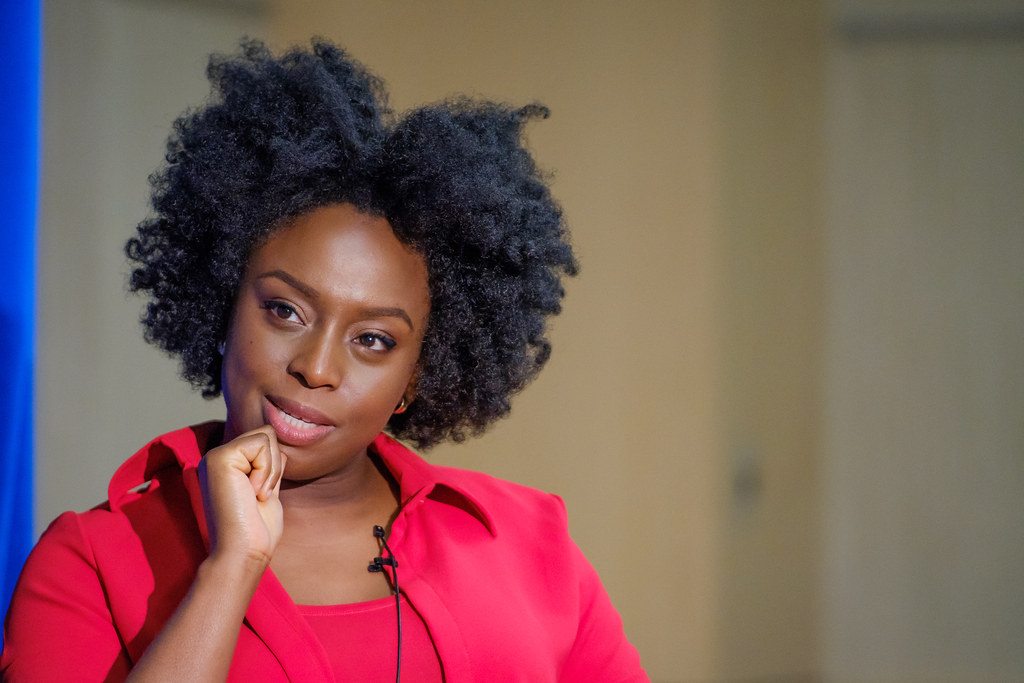
Thanks in no small part to social media, the Eurocentric beauty narrative is changing. Particularly pleasing is the Natural Hair Movement in the Black community, which has led to a more than 26% reduction in sales for hair relaxers over the past six years, according to Mintel Market Research.
When acclaimed Nigerian writer Chimamanda Ngozie Adichie moved to the US her sister urged her to straighten her hair to “look professional.” We salute Chimamanda Ngozie Adichie for resisting this call and, instead, championing natural hair.
Although there is still much progress in the hair and beauty space to be made, there are now plenty of examples where significant changes are being implemented, for example, these:
- Hair discrimination is now outlawed in California. The CROWN (Creating a Respectful Open World for Natural hair) Act of 2019 allows Black women to go to work wearing dreads, braids, or corn rows.
- In the UK, there is an increasing pressure to include afro hair care on NVQ hairdressing courses.
- Salons set up specifically to teach natural hair care are becoming more common.
- We now have dolls with natural hair and black skin, which means that little Black girls have dolls that look like them.
- Global brand Unilever recently announced that it would no longer use the word ‘normal’ on its products and packaging. The company also said it would not “digitally alter a person’s body shape, size, proportion or skin colour in its brand advertising, and will increase the number of advertisements portraying people from diverse groups who are underrepresented.”
- L’Oreal (LRLCF) and Johnson & Johnson (JNJ ) have said they would rename or discontinue some of their skincare brands, too.
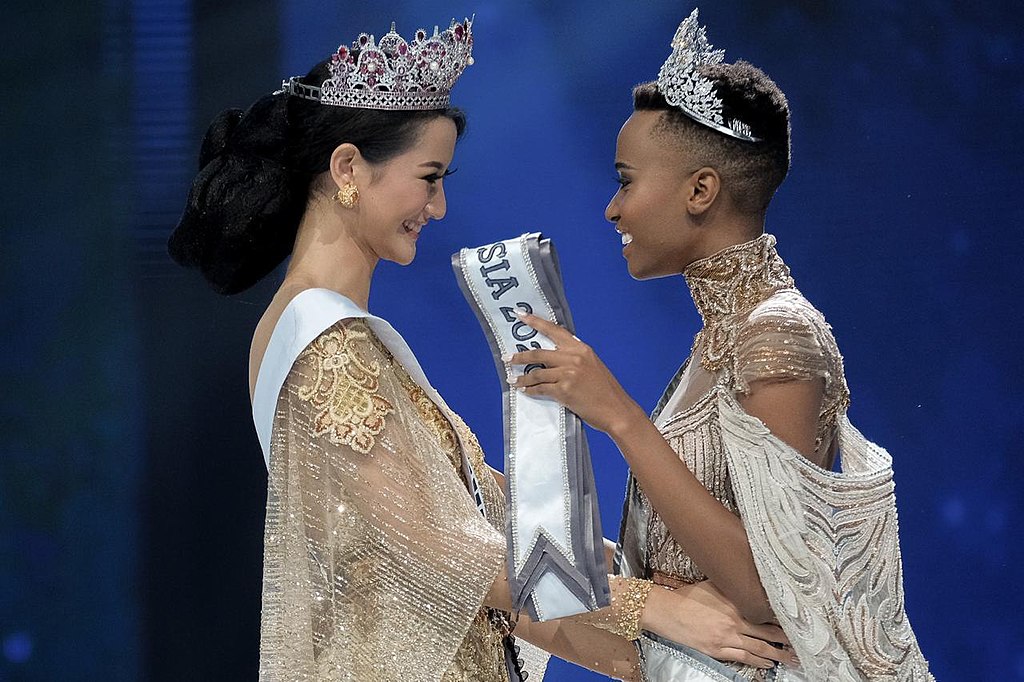
In December 2019, the beautiful, dark skinned, afro hair- sporting South African Zozibini Tunzi won the Miss Universe title. (She was told to wear a wig for the contest, ie hide her natural hair, but she refused.) On accepting her award, Tunzi spoke out against the stereotypical notion of beauty.
“I grew up in a world where a woman who looks like me, with my kind of hair, and my kind of skin was never considered beautiful. I think it’s time that it stops today.”
Beauty influencers are making waves with Instagram campaigns such as #melanin, #don’t touch my hair, and, of course, #Blacklivesmatter. Their influence has the power to change the course of market forces so the beauty industry is compelled to sit up and listen.
Powerful leaders such as Vogue Editor Edward Enninful OBE are working to make diversity and inclusivity the norm; others are following in his suit.
“For me it was very important with Vogue to normalize the marginalized, because if you don’t see it, you don’t think it’s normal.”
Edward Enninful
Fashion designers are featuring models with cornrows on their catwalks. These are the types of actions that are fuelling a more inclusive notion of beauty within society at large; personally, I think it’s great to see celebrities like Adele confidently rock an afro hairstyle (no, it’s not cultural appropriation – it’s progress).
Increasing numbers of Black entrepreneurs are turning their hand to manufacturing products for Black skin tones and natural afro hair. Props to the Black British makeup artist Pat McGrath, who is perhaps the world’s most influential makeup artist. McGrath has transformed the beauty space with her makeup offerings for Black women, making life so much easier for women who enjoy wearing makeup.
Alek Wek’s dark-chocolate skin and shaved head once caused quite a stir. She went on to become one of the most successful supermodels. Another model of Sudanese descent, Anok Yai, made history in 2018 for being only the second Black model ever to open a Prada show (Naomi Campbell was the first, in 1997. Yai, herself no wallflower, is an active campaigner and forthright in her views of racism within the modelling and beauty industry generally. In an op-ed for Oprah Magazine, she writes:
“Black models should not have to teach working professionals how to deal with our hair and skin day in and day out. Educate yourself and come prepared. It’s your job. The world is changing right before our very eyes and we won’t be tolerant of intolerance any longer.”
Boom.
Finally, online communities through social media are springing up where women can talk to each other about their hair, their skin and everything in-between, to encourage each other to embrace the uniqueness of their beauty.
Long may these positive developments continue. Because no little girl or boy, wherever they may be, whatever their race may be, should grow up in a world that tells them they are not beautiful, whether because of the skin they are in or because they do not conform to a dangerously arbitrary standard of beauty.
How do you feel about this issue? Share your thoughts in the comments below.