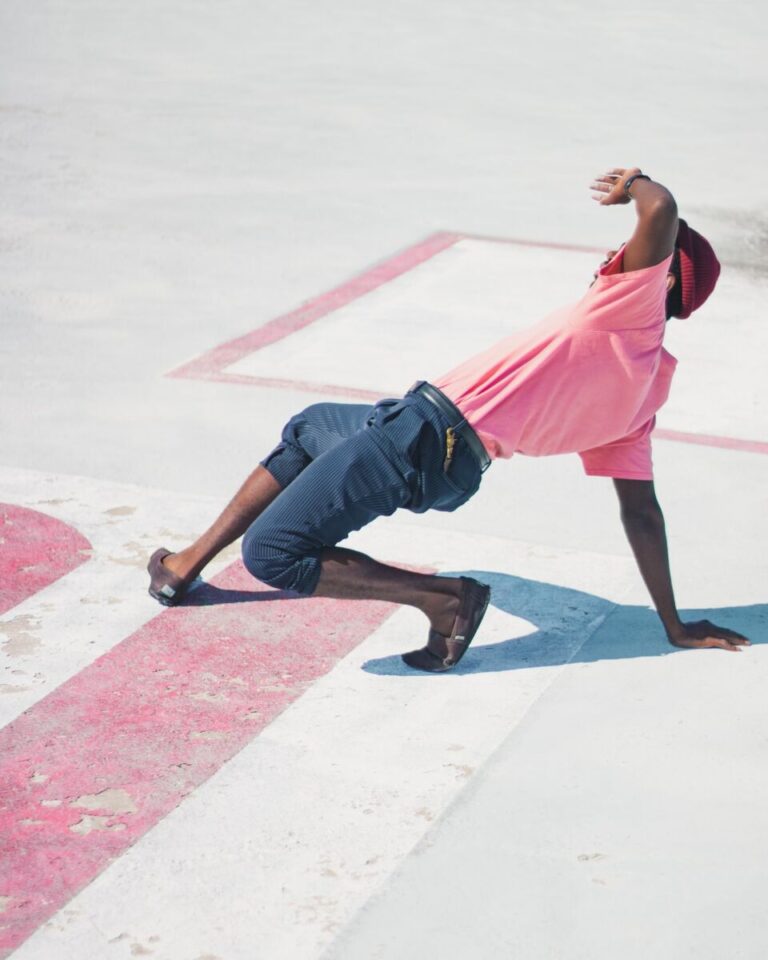
Dance as protest has a long and proud tradition. A vital aspect of democracy is the right to soro soke (speak up) about our troubles and to petition the powers that be to listen to our plights. Dance is art, and art has a singular ability to express embodied truths with freedom and power, nuance and depth.
African traditional dance continues to have an important role as an expression of protest in the Black and Brown struggle for freedom from oppression. In days of old, lacking any consequential political representation, Africans used dance as a means for corporeally expressing their pain and their joy and their visceral cries for equal inclusion in the body politic. Today, although black Africans and African Americans enjoy more representation than they did before, race-based and myriad systemic injustices prevail. We continue to see these corporeal expressions of pain and anguish, for example through dances such as the pantula and the toyi-toyi in southern African countries and, particularly in the US, in African traditional dances such as the bomba and the Cupid Shuffle, dances that were used as an expression of solidarity with the Black Lives Matter movement.
The origins of the toyi-toyi African dance of protest
The origin of the foot-stomping, high-energy, military-esque toyi – toyi dance is moot.
Some say it originated in Zimbabwe, amongst the Zimbabwean Freedom Fighters. Others trace the origin to the Mau Mau people in Kenya, who were protesting against British colonialism. More convincing, I think, is the research that makes a strong case for the toyi-toyi having its roots in the military training camps of Algeria, within the political context of the African Liberation Movement in the mid 60s. Writing in the Conversation, researchers Jocelyn Alexander and JoAnne McGregor trace toyi-toyi’s origins all the way back to Algeria, to the ‘training camps set up to support African liberation movements’. According to Alexander and McGregor, toyi-toyi was believed to be an Arabic expression used in songs and chants, associated with a particular military drill, and not with any kind of dance. The drill’s function was to inculcate toughness and fitness into recruits: hours upon hours upon hours of high-kneed sprinting in harsh terrain while carrying heavy loads and weapons no doubt helped. The chanting, however, embodied the unifying spirit of the movement itself. Toyi-toyi moved southward, through Tanzania and then on to Zambia, ultimately evolving into the toyi-toyi dance seen today in South Africa, which retains much of the military-like edges but has substituted southern African chanting and slogans in place of the Arabic ones.
The toyi-toyi as a weapon in apartheid South Africa
“We didn’t have guns. We didn’t have tear gas. We didn’t have all the sophisticated modern technology for war…for us, toyi-toyi was like a weapon of war.” Vincent Vena, in the documentary Amandla!
In apartheid South Africa, toyi-toyi was a dance of unabashed provocation in a brutal world where Blacks were not only disenfranchised and denied basic human rights but casually shot in cold blood, often in the back. With its loud foot-stomping and synchronous chanting and singing, toyi-toyi was a powerful means of intimidation and of galvanising oppressed against oppressor: the sense of urgency within the dance was perhaps by virtue of the call-and-response rallying cry of its iconic words: ‘Amandla!’ (meaning ‘power’ in Zulu) and ‘Awethu’ (meaning ‘to us’), the paired words completing the declaration ‘power to the people’. Or perhaps the energetic movements within the dance were the engine that disrupted the palpable apartheid tension, transforming it into a galvanising energy. Whatever, toyi-toyi upped the protest ante with its confrontational and aggressive style; successfully intimidating White South African police who were sent out to quell dissent. The following expressed sentiment from a former riot police commander , Adrian de la Rosa, illustrates this:
“Most of the riot police who had to contain those illegal marches were shit-scared of chanting blacks confronting them”
Toyi-toyi became and still is one of the most identifiable acts of protest culture in the world, with its gestures, chants , rhythms and movements. It is emblematic of the move from songs of lamentation and pathos to unbridled anger. The toyi-toyi’s arrival in South Africa intersected with the politics of the time, when the ANC led the fight against defenders of apartheid, taking up arms against the sea of brutality and by opposing , helped to end legal apartheid . Art reflecting culture, as articulated by Brecht:
‘Art is not a mirror held up to society, but a hammer with which to shape it.”
In the South Africa of today, toyi-toyi continues as a march of protest. It is used by universities protesting against fees. Trade Unions toyi-toyi to protest broken agreements. Social movements toyi-toyi – in fact, in almost all protests in South Africa and Zimbabwe, toyi-toyi will undoubtedly be observed. Yet the dance continues to evolve. It is also used as an expression of celebration; for example in May 1994, as the then President Mandela was addressing a huge, jubilant crowd, speaking hope into a broken, damaged country, hundreds of thousands of Johannesburg citizens toyi-toyied out of sheer joy. Mandiba responded in kind. People toyi-toyi today to mark celebrations – toyi-toyi can be seen at weddings, birthdays, graduation days. Ultimately, toyi-toyi in South Africa is a symbol of unity, whether in protest or in celebration.
The pantsula dance of South Africa
A different protest dance associated with South Africa is pantsula, which originated in the townships of Alexandra and Sophiatown, Johannesburg, during apartheid and was used as an expression of resistance to the apartheid regime. It was also as a social commentary on the plight of black South Africans. Pantsula, like toyi-toyi, is marked by high energy levels and is a syncopated, quick-stepping dance that is considered part of urban street culture. Pantsula evolved from the Sotho dances of mqaquanga and marabi, with influence from 1930s American jazz, although it has absorbed influences from American hip hop and breakdance. Today it remains a very stylized expression of cultural roots for black South Africans today, although it has also gained popularity within the white community, taking on a new meaning as an inclusive dance form.
Dance as protest: contemporary examples
Particularly in response to the assassination of George Floyd (ditto Ahmaud Arbery, Breonna Taylor etc etc) but generally as an expression of solidarity with the Black Lives Matter movement, traditional African dance came into its own across the US. But dance as protest is not new in America – from the superb Dance magazine, this:
“During the plantation era, the cakewalk was danced on command by enslaved Africans to entertain the white folk. The owners didn’t realize it was a subtle parody of their own high-falutin’ mannerisms in aping European aristocracy. Mocking ‘Massa’s’ pomposity was a safer way to protest than openly challenging his authority.”
Sure, their white slave master might not have realised this, but they knew.
During the 2019 BLM movement events, the world witnessed glorious displays of dances rooted in the African experience, from the Cupid Shuffle on the streets of Newark to the Electric Slide and from the Senegalese sabar, as seen on the streets of Los Angeles, to the enigmatic bomba, a Puerto Rican dance with African roots. It was this bomba dance that prompted Congresswoman Alexandria Ocasio-Cortez to tweet out, approvingly, ‘Esooooo!’:
During the dance, body, soul and spirit are utterly unified in a harmonious , flamboyant chorus of petition and protest, amplified by the distinctive gestures, movements and accompanying drumming and singing of this enigmatic but ultimately liberating dance. For Puerto Ricans today, bomba remains an instrument of freedom of expression and a means for many Puerto Ricans to maintain a vital connection with their ancestral African heritage.
So numerous are the examples of protest dances that lecturer and hip-hop dancer MiRi Park has created a public Google file listing them all, a list that continues to expand. I commend this list to you.
Black bodies have, since time immemorial, been ascribed with both social and political narratives – but dance gives us the opportunity to break free from those narratives and draw attention to the need for structural change. Important too, is that dance is ultimately a liberating tool for self expression:
‘You can take from us, but you cannot take our joy!’
Dancer Fabricio Seraphin (as reported in the New York Times).
Elsewhere – two more examples of dance as protest
Strange Fruit
Why do I dance? Dance is my medicine. It’s the scream which eases for a while the terrible frustration common to human beings who because of race, creed or color, are ‘invisible’. Dance is the fist with which I fight the sickening ignorance of prejudice.
Pearl Primus
Pearl Primus performed her solo dance enacting Lewis Allan’s poem about lynching in Jim Crow America. She used her performance to protest the violence in America’s deep south.
Still Absent
Kyle Abraham’s 2011 work depicted racial injustices and struggles in contemporary America. What is ‘still absent’, though, is truly equal rights for people of colour, despite the Civil Rights movement and similar protests.