


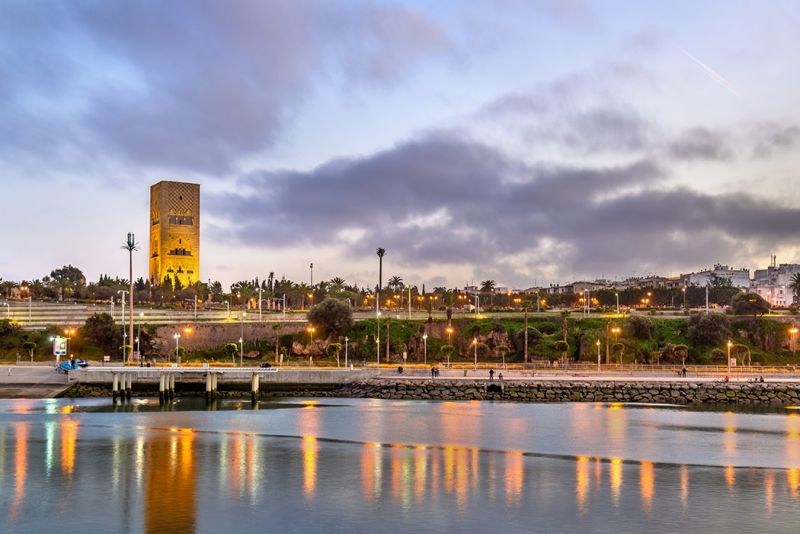
The 29th edition of the International Book and Publishing Fair (SIEL) was held in Rabat from 9 to 19 May 2024. For the third year, this event is held in the Moroccan capital, since it was in Casablanca, where the majority of Morocco’s book industry is settled, that this major popular event was launched in 1987.
This move was accompanied by a considerable increase of the event’s budget: from around 8 million dirhams (around $780,000) when it was in Casablanca[1], it has almost tripled by 2022, to 22.9 million dirhams (around $2.3 million). This year, the budget reached 45 million dirhams (around $4.5 million)[2]. The event’s official figures point to a 316,000-strong increase in visitor numbers, up 32% on 2023, and a final tally of 1.1 million books sold for 120 million dirhams (around $11.9 million).[3]
These significant figures, which demonstrate a desire to make this event a must-attend event, should be seen in the context of two other factors: piracy and the lack of a public reading policy.
The 2024 edition of the SIEL was marked by a scandal linked to the discovery of pirated books, and by the mobilisation of publishers and booksellers to close down several stands and seize their stocks. The phenomenon of piracy, of both physical and digital books, has been endemic in Morocco for more than a decade, but this is the first time that pirated books have had such a massive presence at the fair, which intends to be an international showcase for Morocco’s intellectual and literary life.
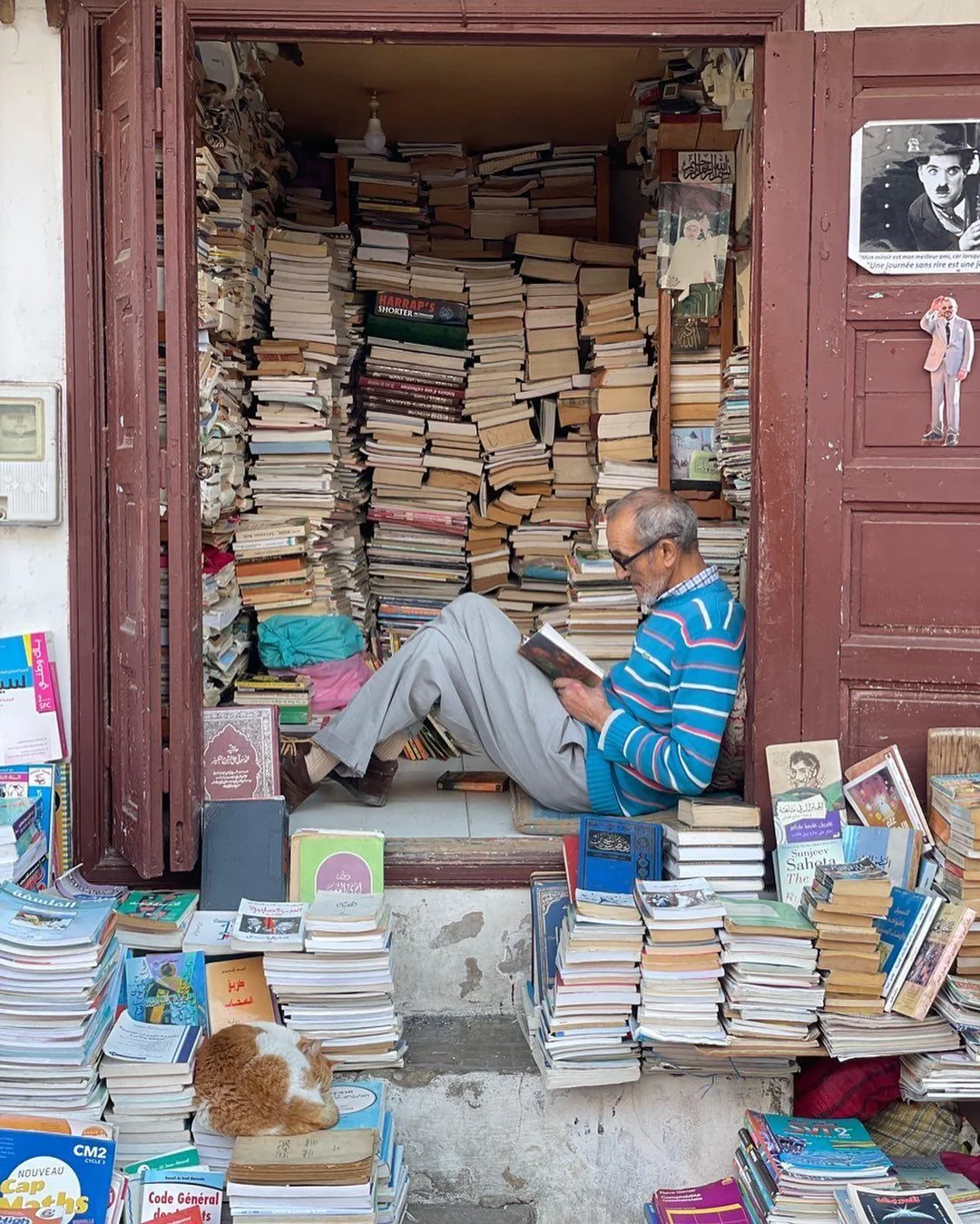
The fact that the closed stands are those of foreign publishers raises questions about the responsibilities of customs, the Foreign Publications Office under the Ministry of Youth, Culture and Communication, which authorises the entry of books into Morocco, and the organisation of the fair itself.
Until today, however, no action has been taken by the public authorities to tackle this phenomenon, which symbolically devalues books and has catastrophic repercussions for the sector’s economy. Bookshops, which face unfair competition from farrachat (the street stalls selling pirated books), are too small to bear alone the cost of legal action. Only La Librairie Nationale, the Moroccan subsidiary of the Hachette Livre group, has been able to undertake legal action, but it is calling for “nationwide action against piracy”[4]. But despite several initiatives by publishers and booksellers to raise awareness among the public authorities, nothing has been done. Worse still, in 2017, the Ministry of Culture passed on the responsibility to the Moroccan Copyright Office (BMDA)![5]
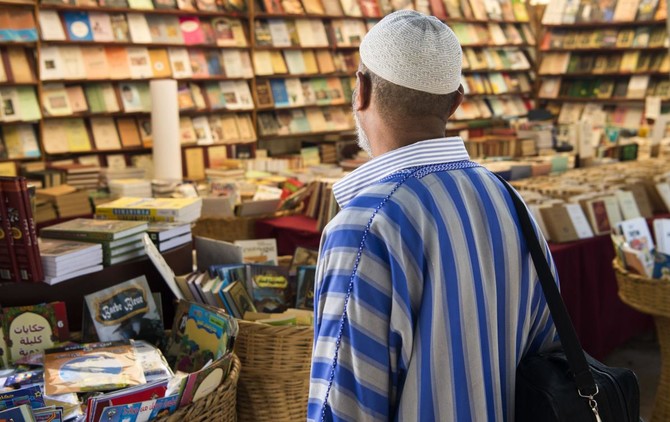
In the absence of an exact estimate of the number of pirated books in circulation, it is not possible to put a figure on the loss or to determine damages.The inaction of the public authorities in the face of piracy has had the effect of encouraging and entrenching the phenomenon in a context where the price of books, in relation to the people’s purchasing power, remains high. The average Moroccan book costs 83.70 DH (around 8 dollars), which represents 30% of the price of a book imported from France[6], while the minimum wage is 3,111 dirhams (around 306 dollars).
Of course, access to books, knowledge and culture is a fundamental human right. But tolerating piracy means that booksellers, authors and publishers have to finance this right, and that the entire chain of production of this knowledge and culture is hampered.
It also has an impact on the sociology of those who can afford to devote themselves to these professions:professions from which it is very difficult to make a decent living. Indeed, the fact that only privileged people can become writers and be published, has an influence on the image of Moroccan society produced by these conditions and it has consequences on the image Moroccan people can see of themselves.
The only way to properly guarantee this right to books, knowledge and culture is to put in place a genuine public reading policy. In November 2014, the first edition of the General States of Culture, initiated by the association Racines, established for cultural development in Morocco and in Africa, presented an inventory of training, creation and distribution structures in different cultural sectors.
As the person in charge of the study on books, publishing and public reading, I counted 394 libraries[7], 297 of which are listed on the Ministry of Culture website. Given that there are 1,503 communes in Morocco, this meant that there was far less than one public library per commune.[8]In 2021, there were only 332 libraries remaining, and in 2022, 240 libraries, according to figures from the High Commission for Planning[9], a quarter of which are concentrated in a single region, Tangiers-Tetouan-Al Hoceima – which is not likely to guarantee equitable access for all citizens throughout the country. With a population of around 37.3 million, the number of registered readers is only 43,545 for 13,039 available places[10]. In 2022, only 824,948 books were on display, a slight increase on the 797,581 in 2021 –but well below the UNESCO target of at least 1 book per capita.
This situation can be explained by the fact that, since 2013, the Ministry of Culture has implemented a Publishing Support program[11] intended to support primarily bookshops and publishing houses but which has not received any additional budget. Because of this, the budget previously allocated to the Department of Public Reading has been redirected to the program. As a result, the creation of new libraries, the recruitment of qualified librarians, the purchase of books to update collections and the organisation of activities have all been restricted. While we can certainly welcome the modest but steady increase in the culture budget as a proportion of overall public spending (from 0.2% in 2005 to 0.9% in 2018[12]), it has to be said that efforts are not concentrated on creating local facilities, which is urgently needed.
In these conditions, the efforts concentrated on the International Book and Publishing Fair can only be understood as an events policy, or even an element of soft power. This is not to deny its usefulness, but to ask what the priorities are, when our fellow citizens do not have the basic conditions of access to their fundamental rights.
About the Author, Kenza Sefrioui
Kenza Sefrioui is a cultural journalist, literary critic and publisher. She wrote the literary column for Le Journal Hebdomadaire from 2005 to 2010 and now contributes to www.economia.ma and enass.ma. She wrote her doctoral thesis in comparative literature at the Université Paris IV-Sorbonne on the review Souffles (1966-1973), espoirs de révolution culturelle au Maroc (Éditions du Sirocco, Grand Atlas prize 2013). She also co-edited Casablanca œuvre ouverte, an expanded edition of Casablanca, fragments d’imaginaire with a second volume, Casablanca poème urbain on contemporary writing in Casablanca (Le Fennec, 2013). Co-founder of the publishing house En toutes lettres and a cultural activist, she is the author of an investigation into books in Morocco: Le livre à l’épreuve, les failles de la chaîne au Maroc (En toutes lettres, 2017). She recently published 80 mots du Maroc (L’Asiathèque).
About the African Perspectives Series
The African Perspective Series was launched at the 2022 Nigeria International Book Fair with the first set of commissioned papers written and presented by authors of the UN SDG Book Club African Chapter. The objective of African Perspectives is to have African authors from the book industry and from the spectrum of related disciplines, contribute to the global conversation around development challenges afflicting the African continent. These important papers are published on a range of suitable platforms which can include the SDG Book Club Africa blog hosted in the Stories section of https://namibia.un.org/en; on Borders (www.bordersliteratureonline.net); at pan-african.net, and on other suitable platforms. We seek to project our authors’ ideas about the way forward for African development, to the widest possible, interested audience. The African Perspectives Series is an initiative and property of Borders Literature for all Nations.
[1]Chabâa, Qods, « SIEL 2022 à Rabat : un budget multiplié par trois », Le360.ma, June, 1st, 2022. Available on https://fr.le360.ma/culture/siel-2022-a-rabat-un-budget-multiplie-par-trois-261001/ (consulted on June, 26th, 2024).
[2]Chabâa, Qods, « Organisation du SIEL 2024 : l’appel d’offres lancé, pour un budget de 45 millions de dirhams », Le360.ma,February, 19th, 2024. Available on https://fr.le360.ma/culture/organisation-du-siel-2024-lappel-doffres-lance-pour-un-budget-de-45-millions-de-dirhams_2WXMTBNFMZEIJCKL2HGW5UDYXU/ (consulted on June, 26th, 2024).
[3]Senhaji, Fayza, « SIEL 2024 : plus de 1,1 millions de livres vendus pour plus de 120 millions de dirhams », Le360.ma, June, 4th, 2024. Available on https://fr.le360.ma/societe/siel-2024-plus-de-11-million-de-livres-vendus-pour-plus-de-120-millions-de-dirhams_TIOU5OZV7NE7LJ4OQXDAQGSX4I/ (consulted on June, 26th, 2024).
[4]On thissubject, seemy investigation in Le livre à l’épreuve, les failles de la chaîne au Maroc, « Livres piratés », Casablanca, En toutes lettres, 2017, p. 55.
[5]Ibid.
[6] El Ferrane, Mohamed (dir.), Édition marocaine, État de l’édition et du livre au Maroc dans les domaines de la littérature et des sciences humaines et sociales, 2022-2023, Fondation Al Saoud, 2024, p. 28. Available on https://www.fondation.org.ma/web/article/356 (consulted on June, 26th, 2024).
[7]https://www.artmap.ma/fr/adressesmap?discipline=55 (consulted on June, 26th, 2024).
[8]Le livre à l’épreuve, « Mais où est le livre ? », op. cit., p. 14.
[9]Les indicateurs sociaux du Maroc,édition 2024,High Commission for Planning, p. 262. Disponible sur https://www.hcp.ma/ (consulted on June, 26th, 2024).
[10]Ibid., p. 271.
[11] In 2023, just over 8 million dirhams supported 395 projects. See https://mjcc.gov.ma/ar/%D9%86%D8%AA%D8%A7%D8%A6%D8%AC-%D8%AF%D8%B9%D9%85-%D9%82%D8%B7%D8%A7%D8%B9-%D8%A7%D9%84%D9%86%D8%B4%D8%B1-%D9%88%D8%A7%D9%84%D9%83%D8%AA%D8%A7%D8%A8-%D8%A8%D8%B1%D8%B3%D9%85-%D8%B3%D9%86%D8%A9-2023/ (consulted on June, 26th, 2024).
[12]Les indicateurs sociaux du Maroc,édition 2024, op. cit., p. 276. NB : the figure for 2021, 2%, is the joint budget for culture, youth and sport, now grouped under the same ministry.


