


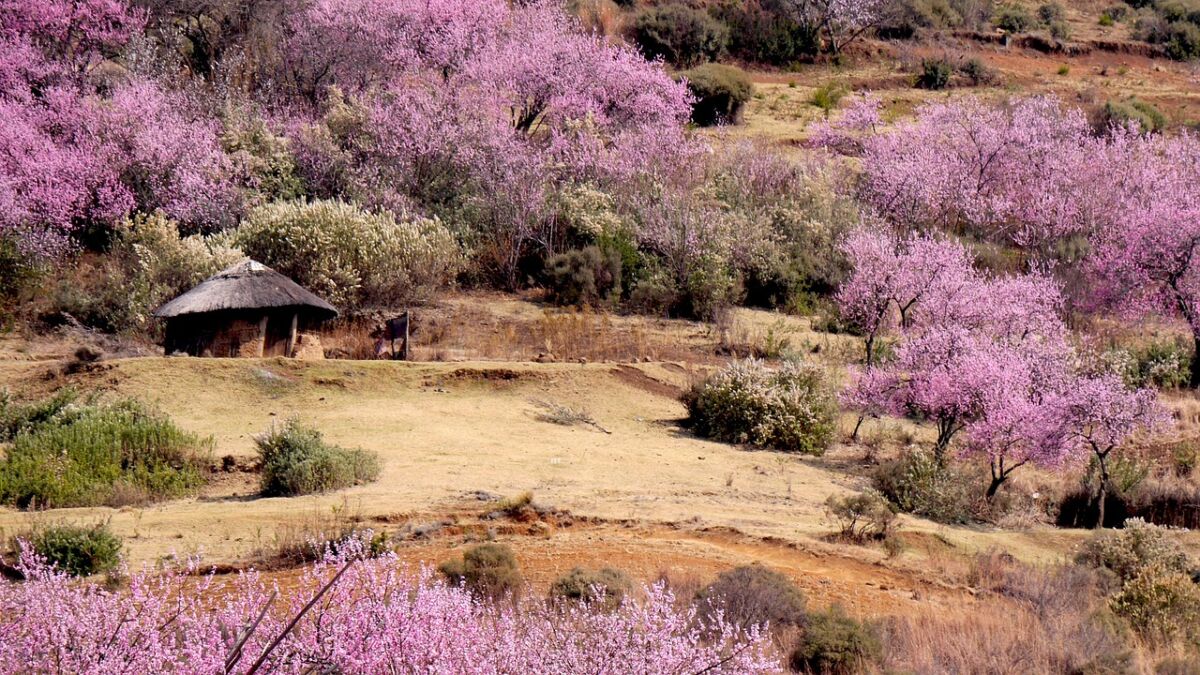
In a recent speech, U.S. President Donald Trump dismissed Lesotho as a country that “nobody has ever heard of.” Ironically, his comment has had the opposite effect—it has sparked global curiosity and excitement about this gem in Southern Africa. For those who have taken the time to explore beyond mainstream narratives, Lesotho is far from obscure.
Lesotho is not just another dot on the map. It’s a sovereign nation, uniquely landlocked within South Africa. But what makes it truly special is its altitude—Lesotho is the only country in the world entirely above 1,400m (4,593ft), earning it the well-deserved nickname “The Kingdom in the Sky.” This isn’t some poetic moniker; it has real implications for the country’s climate, culture, and economy.
The Snow-Capped Secret of Africa
Most people associate Africa with blistering heat, sprawling savannahs and deserts stretching beyond the horizon. Few realise that Lesotho experiences snowfall and is home to Africa’s highest ski resort—Afriski. Located in the Maluti Mountains at an altitude of 3,222m (10,570ft), Afriski offers a winter sports experience that is unparalleled on the continent. Visitors can ski, snowboard or simply revel in the novelty of African snow. The resort attracts adventure seekers from across the region, yet it remains one of the continent’s best-kept secrets.
A Lifeline for Southern Africa
Beyond its unique geography and tourism potential, Lesotho plays a crucial role in sustaining life far beyond its borders. Known as the “water tower of Southern Africa,” Lesotho is the source of the Senqu River (called the Orange River once it crosses into South Africa), and it supplies millions of South Africans with fresh water through the Lesotho Highlands Water Project (LHWP). This billion-dollar initiative has been lauded as a model for regional cooperation, proving that a small nation can have an outsized impact on its neighbours.
According to the World Bank, the LHWP has significantly boosted Lesotho’s economy, with royalties from water sales making up nearly 10% of the country’s GDP. However, the project is not without controversy—many local communities have been displaced to make way for reservoirs. These complex dynamics highlight the challenges of balancing national development with social justice.
A Rich Culture with Global Influence
Lesotho’s cultural heritage is as striking as its landscapes. The Basotho people are known for their iconic mokorotlo (traditional hat) and seanamarena (blankets worn as cloaks), which serve both a practical purpose and a deep cultural significance. In an era of mass production and homogenisation, Basotho craftsmanship has retained its authenticity, with wool-weaving and traditional music continuing to thrive.
But did you know that Lesotho has had a subtle yet significant impact on global culture? The famous Basotho blanket was featured prominently in Marvel’s Black Panther, worn by the Dora Milaje warriors as a symbol of strength and heritage. This moment brought a fragment of Lesotho’s identity onto the world stage, reinforcing the fact that African traditions are not relics of the past—they are living, evolving, and globally relevant.
Economic Challenges and Opportunities
Like many nations in the Global South, Lesotho faces economic hardships. It relies heavily on textiles, agriculture, and remittances from Basotho workers employed in South African mines. The World Bank reports that approximately 50% of Lesotho’s population lives below the poverty line, and unemployment remains a significant issue, particularly among the youth.
However, there is hope. Tourism presents a massive opportunity, and global interest—spurred by moments like Trump’s dismissive remark—should be leveraged to showcase the country’s breathtaking landscapes, adventure tourism and rich cultural heritage.
Lesotho also has untapped potential in renewable energy. Its high-altitude location and abundant water resources make it ideal for hydroelectric power generation. With the right investments, it could become a leader in clean energy for the region.
Turning a Political Gaffe into a Marketing Opportunity
What was meant to diminish a nation has instead shone a global spotlight on its beauty, culture, and resilience. The question now is whether Lesotho’s government, business leaders, and tourism industry will seize this moment.
Honourable Minister of Tourism, Environment, and Culture, Ntlhoi Motsamai, and cabinet—this is your moment. Launch a world-class communications campaign, starting with an updated digital presence. The official Lesotho tourism website is in dire need of a refresh, and strategic international partnerships could help drive sustainable tourism.
My team and I stand ready to help craft a compelling narrative that positions Lesotho as the must-visit destination it deserves to be. Sometimes, the best response to ignorance is simply to show the world what they’ve been missing.
Lesotho may not be on every traveller’s radar—yet. But for those who appreciate breathtaking scenery, cultural richness, and the allure of undiscovered destinations, it is a place like no other.
So, while some may ask, “Where is Lesotho?” the better question is: “When are you visiting?”


