


What is Djibouti known for?
When someone mentions Djibouti – what springs to mind?
For many, it’s simply a tiny African country east of Ethiopia – with a large Somali population. But scratch beneath the surface of this Horn state and you’ll find alien landscapes, bountiful nature and ancient history.
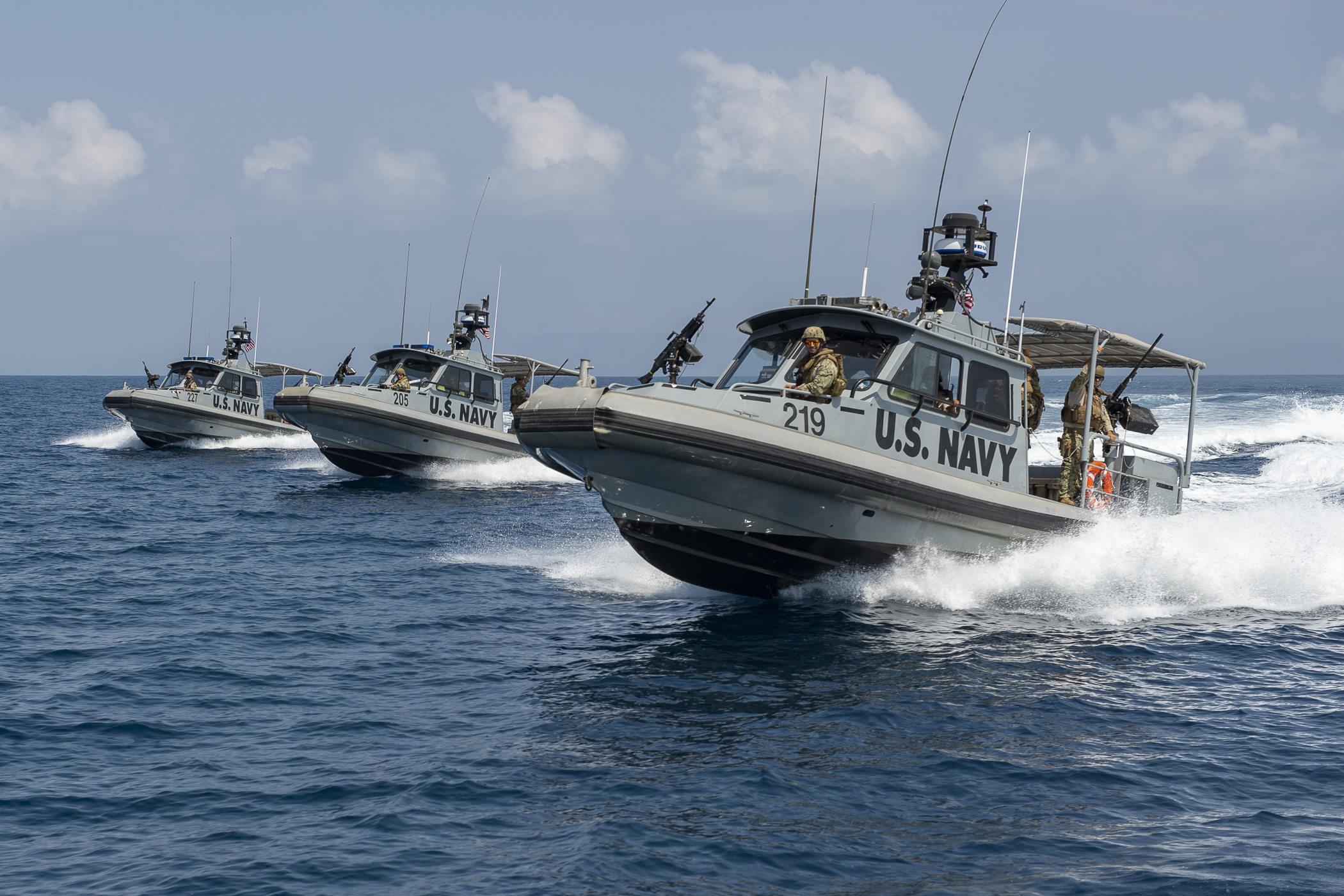
A former French colony, inhabited since at least the Neolithic period, Djibouti is also home to America’s largest military base on the continent. So I think it’s fair to say that there’s more to this African country than meets the eye…
Great lakes
Djibouti sits atop a divergent plate boundary known as the Triple Afar Junction. This geographical depression produces unique phenomena that would look more at home in a George Lucas film.
Nowhere is this more evident than at Lac Assal. At 155 metres below sea level, this crater lake is the lowest point in Africa and the third-lowest point in the world (only the Dead Sea and the Sea of Galilee are lower). It’s also the second saltiest body of water on Earth – some ten times saltier than the sea.
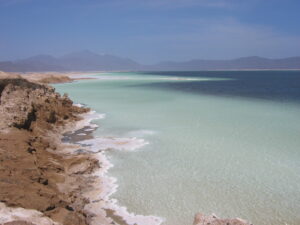
But such facts are immaterial when you emerge onto this vast salt-plain. Masquerading as a picture-perfect beach, it has an otherworldly feel to it. For beyond the lake and its banks lie black lava fields, rocky mineral pillars and the faint outline of dormant volcanoes.
Lac Abbe, which straddles the border with Ethiopia, is another sight to behold. The final destination for the Awash River, this desolate plateau has been compared to the surface of the moon.
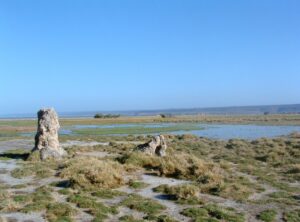
Suitably apocalyptic, it features hundreds of limestone “chimneys” – jagged formations that emit puffs of steam into the atmosphere. Yet despite its surreal nature, it is home to a great deal more flora and fauna than Lac Assal.
Flamingos and pelicans can be seen on the lake’s shores and wild boar roam free. Often, camels, sheep and goats can be spotted too. But these animals are likely to belong to the nomadic Afar people – a tribe that utilises the lake’s many hot springs, in order to graze them.
Opulent oceans
Djibouti’s maritime borders look out on one of the busiest shipping routes in the world. The 19km Bab el Mandeb strait, which lies between Djibouti and Yemen, sees 4.8 million barrels of crude oil pass through it a day. So it might come as a surprise to learn that this tiny nation is also home to a host of aquatic activities.
Noting its exciting coastline, Lonely Planet states that “as on land, there’s a real sense of adventure”. And what could possibly be more thrilling than swimming alongside the world’s biggest fish?
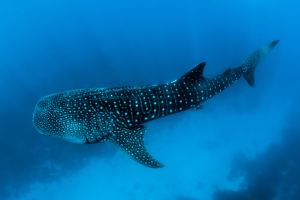
Known to some as “domino fish”, due to their numerous spots, whale sharks migrate to Djibouti’s warm waters to give birth. Despite their impressive size (up to 12m) they are peaceful beasts. Just don’t touch, feed or submerge yourself beneath them!
This fascinating African country also boasts some of the best dive spots in the world. There are several bays and an archipelago – the Seven Brother’s islands – that feature both popular wrecks and pristine reefs. And due to the low numbers of tourists (some 140,000 visited Djibouti in 2018) precious few others.

Landlord to military might
Djibouti gained independence in 1977 and spent the best part of the 90s in the civil war. However, due to its relative stability and proximity to “restive region”, this African country now enjoys the role of landlord to superpowers.
The US, France, Spain, Italy, China and Japan all have bases in Djibouti. America’s is their largest permanent military base in Africa, Japan’s their first overseas base since WWII and China’s their first overseas base, period. There are even talks about China establishing a naval base – a move that, unsurprisingly, has angered some in Washington.
Yet for Djibouti, such developments are welcomed with open arms. The rental of these bases (estimated at $300m a year) provides a much-needed cash injection into their economy. And now, with the help of the Chinese, this African country hopes to go even further – creating a $3.5 billion “free trade zone” that its leaders believe will turn it into the ‘The Horn of Africa’s Dubai’.
Only time will tell whether this gamble pays off.
But what’s for sure is that Djibouti remains one of the most misunderstood of the African countries.
So what do you think? If you do choose to visit the country head for the Djibouti Palace Kempinski hotel.
Sources
https://www.bbc.co.uk/news/world-africa-33115502
https://www.bbc.co.uk/news/world-africa-13231761
https://www.theguardian.com/news/2020/apr/20/weatherwatch-djiboutis-climate-a-tale-of-two-halves


