


The hunt for the healthiest ‘superfoods’ (note: there’s no such thing, nutritionally, as a ‘superfood’ – the term was coined by savvy marketers) shows no sign of abating: increasing numbers of nutritionists and health and wellbeing professionals are turning to the continent to find nutrient-packed African superfoods. It would appear that people want – need – more than an apple a day to keep the doctors away and more than a crunch on a carrot to stave off eye rot.
Although no single food can cure you of your ailments and none can offer all the nutrition we need to nourish ourselves, there are healthy eating patterns that we can all follow, by combining healthy food choices from across all food groups. Healthy food choices can reduce the risk of diseases such as high blood pressure, heart disease, diabetes, and more – for example, the Dietary Approaches to Stop Hypertension (DASH) diet and the Mediterranean diet, which are mostly plant-based, have in clinical trials demonstrated significant positive health outcomes.
There are no set criteria for evaluating superfoods. Still, the following African superfoods can be singled out for special recognition – because they offer important nutrients that can supercharge the nutrient quota of your meals and snacks, and they have other great benefits. Start adding them to your diet today.
“Africans sometimes find it hard to see the value of natural foods that come from home. They eat it without realising the tremendous value of their own culinary heritage.”
Fousseyni Djikine, owner of two BMK restaurants in Paris, via Africa Report
Enset – Ethiopia’s superplant

Translated as ‘false banana’ in English, enset is a superplant that has the potential to feed 100 million people, according to scientists.
Enset is a staple diet for around a quarter of the population of Ethiopia (particularly in the southern part) but it could potentially feed a great many more, making it an extremely important plant in the face of climate change. According to this scientific review, foods from enset are said to contain high amounts of carbohydrates, minerals and essential amino acids such as lysine and leucine.

It’s also a real multitasker: as well as being used to make porridge and bread, enset is also used to create a variety of products, from sacks and ropes to mats and packaging and for healing purposes.
Have we saved the best bit till last? Enset not only protects soil fertility but it can be cultivated in all seasons. Superfood? Yep.
Related post: Powered by Plants: Powered by Plants – Meet Helen, the Woman Behind ethiopianfoodie and Amaarech
Moringa oleifera

There was a time when you would be hard-pressed to find moringa products, but now, they are seemingly everywhere. The word is out – moringa is great for you.
The health benefits of moringa are well documented, but if you didn’t know it, moringa has been used for centuries to help improve a variety of conditions including diabetes, inflammation, and bacterial, viral and fungal infections.
Nutritionally, moringa oleifera leaves have 7 times the level of vitamin C than oranges and 15 times more potassium than bananas. They also contain calcium, protein, iron and amino acids to help you build muscle and heal; add to this the fact that moringa is teeming with antioxidants, which not only protect cells from damage but can also lower blood pressure and reduce fat in the blood and body.
Moringa can be consumed in a variety of ways. The leaves can be added to salads, rice or pasta (stalks removed), or added to shakes and even baby milk. Moringa powder can be used as a tea, added to beverages and soups or taken in capsules. Moringa is also available in oil form, so you can drizzle this over your salads, too. Around 100g of moringa will give you as much protein as an egg, as much calcium as a large glass of milk, as much calcium as a 200g of steak and as much vitamin C as an orange.
Baobab

There’s more to the baobab tree than the striking Avenue de Baobabs in Madagascar. The baobab fruit has twice as many antioxidants as goji berries, blueberries or pomegranates.
A few of baobab’s significant benefits:
It can help to reduce blood sugar. A 2016 study found that not only is the baobab fruit high in antioxidant-producing polyphenols, but when the fruit extract was added to white bread, it reduced the amount of insulin required to manage the blood glucose response.
It can help treat high temperatures. There is evidence that the fruit, pulp and seeds have anti-fever properties and, as such, may bring down body temperature.
It’s rich in fibre, promoting a feeling of fullness. This is why baobab is often used as a way to curb appetite. A small study has affirmed the baobab’s role in reducing hunger.
Add some baobab powder to your favourite smoothies or use it in baking – try making this baobab cheesecake.
Fonio (also known as acha, iburura, and ‘hungry rice’)
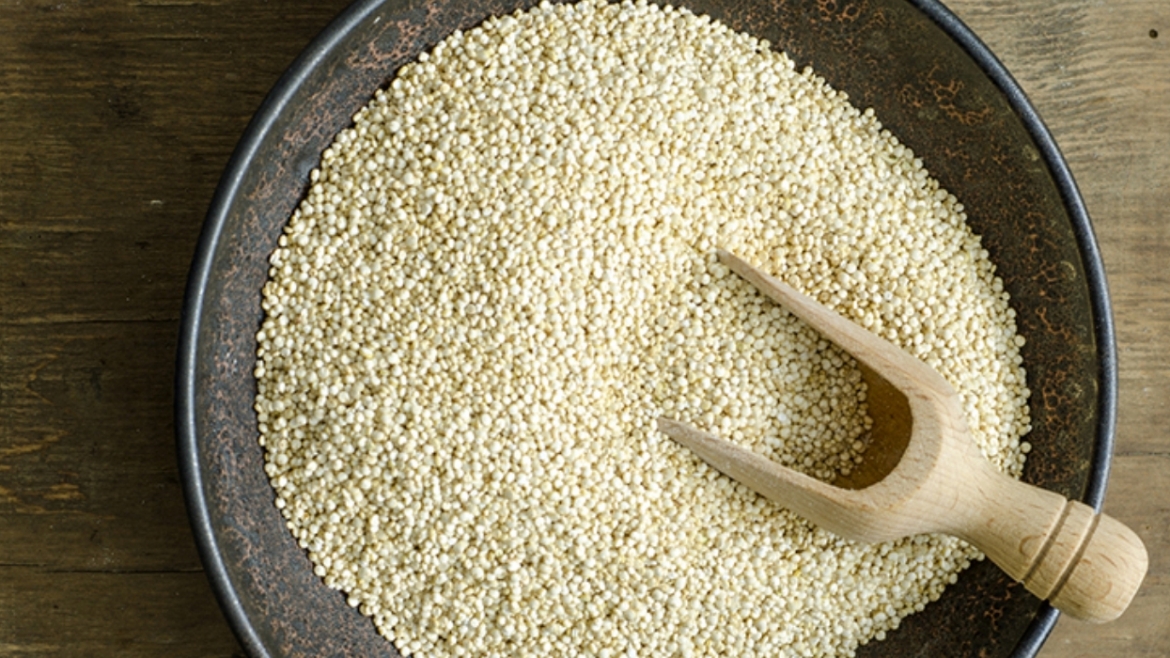
Move over quinoa – fonio, West Africa’s 5000-year-old whole grain, puts the super in supergrain. It’s quick to cook, nutritious and gluten free; it also happens to thrive in arid environments and regenerates the soil.
Nutrient-wise, fonio is low in ‘bad cholesterol’, sodium and fat, and it has a low glycaemic index, making it perfect for cooking a variety of foods we all love. In addition, the UN Food and Agriculture Organization has suggested that fonio has the highest calcium content among all grains.
Although the protein content of fonio is comparable to that of rice, wheat, barley and corn, fonio contains two amino acids that are lacking in those grains, in particular methionine and cysteine. Methionine cannot be made by the body and must therefore be obtained from food; it’s required for healthy skin elasticity, hair growth, nail health and the growth and repair of body tissues. Cysteine is required for protein synthesis and detoxification.
Consuming fonio
- As a substitute for any grain, such as rice or quinoa.
- As a porridge: treat it as you would treat breakfast oats.
- Add it to soups and stews.
- Sprinkle it on salads.
- Use fonio flour in the same way you would use traditional flour.
To make fonio, bring 240ml of water to the boil and then add 45g of fonio. Stir, and cover. Reduce the heat so it cooks gently and cook until all the water has been absorbed.
Tamarind

Although native to Africa, tamarind, a type of fruit, is also found in tropical climates such as India. The tamarind tree produces characteristic, bean-like pods that contain seeds and a fibrous pod. When the pods ripen, the pulp becomes like a paste and has a slightly sweet, slightly sour taste. Tamarind is typically bought as a pate, but it can also be bought in the form of a pressed block.
Benefits
Tamarind has several benefits. Its pulp is a great source of antioxidants, needed by the body to reduce the inflammatory aspect of oxidative stress (this occurs when there’s an imbalance between free radical activity and antioxidant activity; too many free radicals can lead to diseases such as diabetes).
Tamarind has also been shown to lower LDL cholesterol (aka ‘bad cholesterol’) and increase HDL cholesterol (the good type), lowering atherosclerosis risk. The dried pulp has been shown to have antihypertensive properties, too, lowering diastolic blood pressure. And the fruit extract of this superfood has also been shown to have protective effects on the liver thanks to antioxidants called procyanidins, which counter free-radical damage to the liver.
Tamarind is also pretty easy to use. Buy the paste and use this to make curries and a variety of other dishes such as this delicious tamarind prawn curry (or substitute vegetables for the prawns if you’re vegan).
For millennia, Africa’s fertile lands have provided a prodigious supply of indigenous plants for food and medicine. Today, smart food entrepreneurs are using local produce to create healthy foods — and make a fortune in the process. Are you one of them?
READ NEXT: Powered by Plants: Powered by Plants – Meet Helen, the Woman Behind ethiopianfoodie and Amaarech


