


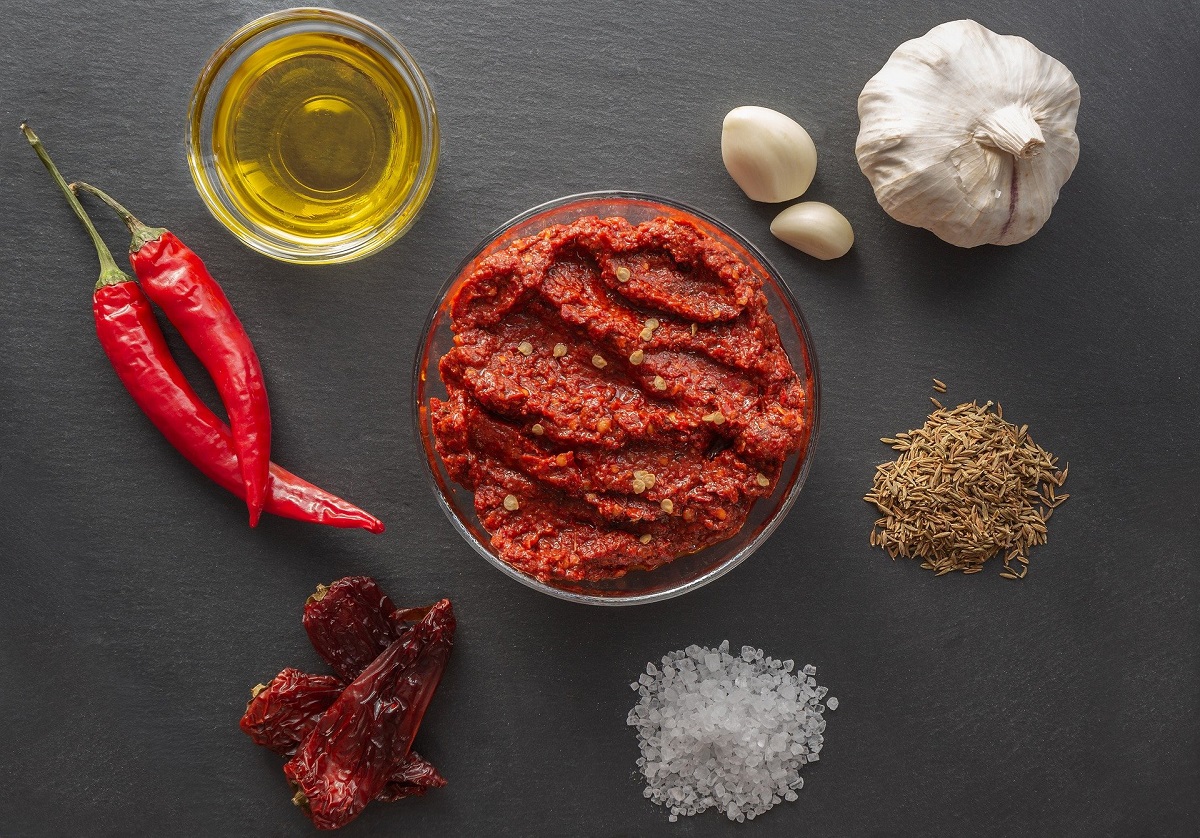
Globetrotting foodies have every reason to set their sights on Tunisia. With the sheer variety of delectable dishes on offer, a jaunt to the nation’s capital Tunis (and beyond) should definitely be on the cards. Easy refuelling is a given as you discover Tunisia’s many-splendored gems, with everything from fresh fish along its Mediterranean coastline to meat and lentils in the south. And what is on the menu for those in pursuit of a spicy sojourn? Here are 7 Tunisian meals sure to keep bona fide foodies’ winter hunger pangs at bay – with a sweet snack selection to enliven those medina meanderings.

Tunisian eggs for breakfast
Originating in Tunisia, shakshuka (or ‘mixture’ in Tunisian Arabic) is popular across North Africa (and the Middle East after Tunisian Jews exported it there), especially among those who like it hot. Thanks to the addition of local spice paste harissa, this North African breakfast staple is as spicy as it is hearty. Eggs are poached on a stew-like base of chopped tomatoes, peppers, onions, garlic, chilis and assorted spices like cumin and coriander.
Shakshuka is typically served in a skillet and accompanied by bread for dipping into its rich, aromatic sauce. Seasonal additions abound in the form of broad beans and courgettes, to name a couple.
For a delicious, affordable shakshuka in an authentic setting, look no further than one of my favourite eateries, El Mrabet in the historic Tunis medina.
A meaty spin on the dish known as ojja incorporates merguez, a local spicy (lamb or beef) sausage you may know from French cuisine. But, a little-known fact is that it was actually a Tunisian export to its former colonizer!
However, street food enthusiasts with a small stomach and no time to waste should opt for the Ottoman-inspired brik. This paper-thin, the triangular-shaped pastry is deep fried and typically encases a runny egg with either tuna or mincemeat. Give it a generous squeeze of lemon before tucking in – and see if you can do it without getting egg on your face!
A Tunisian soup duo for lunch
Lablabi is a hearty winter soup served at gargottes (unassuming restaurants) throughout Tunisia. This chickpea stew marries harissa, cumin, lemon and garlic flavours and is sure to warm the cockles of any weary explorer. Restaurants normally provide an empty bowl and bread basket to start, and you should have no qualms about tearing off small chunks for your bowl. The soup will then be ladled in over them, and usually topped with boiled eggs and tuna. Request the meat-free (or vegan) version by stating ‘sans (oeufs et) thon’. Lablabi is a delicious dish with the power to make the dessert course obsolete.
While chorba is a go-to soup any time of the year, it really comes into its own during the winter months. Its name derives from the Arabic word shorba (meaning ‘gravy’) and it is potent enough to imbibe patrons with renewed joie de vivre. This traditional Ramadan broth is essentially a tomato soup with bulgur wheat, but variations do exist. Meaning meat (chicken or lamb) is an equally firm favourite, with fish popular at coastal eateries. And it is spiced with – you guessed it – a healthy dose of harissa.
A Tunisian feast for dinner

Billed as the ultimate North African staple, couscous is a dish that no serious foodie can afford to skip when visiting Tunisia. It is a hand-me-down from the Berbers who still inhabit Tunisia’s southern Sahara-steeped area. The good news? It is available throughout the country – and the world – in countless variations.
Broken down, couscous comprises a large helping of semolina topped with fish (an exclusively Tunisian addition found primarily on the island of Djerba) or meat (chicken or lamb). With assorted vegetables thrown in for good measure. A fiery dollop of harissa is commonly mixed in, or served alongside. A perfect winter warmer on those chilly December nights.
Then again, if a day of exploring has taken its toll, head for the nearest street food stall and grab yourself a Tunisian tagine. Unlike its Moroccan cousin – which is cooked in the conical dish adorning many a travel brochure and souk merchant’s store – the Tunisian version recalls the French quiche or Italian frittata. This scrambled egg slice features a medley of vegetables along with a little chicken, tuna or other meat, and is a quick and easy snack for those short on time (or patience!).
Sweet treats for on the go
Tunisian snacks are ubiquitous in the nation’s historic medinas, many of them inherited from the empires that have governed the North African nation over the centuries. Such as the baklava-blessed Ottoman influence or the Italian-inspired bambalouni (Tunisia’s answer to the doughnut, doused in sugar or honey). Or a local favourite, makroudh – a fried semolina biscuit originating in Kairouan that is filled with date paste and dipped in sugar syrup.
However, those more partial to pudding should seek out assida zgougou, a creamy pine nut dessert made to celebrate Mwalid (prophet Muhammad’s birthday).
Tunisian cuisine is a blend of Berber, Arab, Ottoman, French and Andalusian staples. Whether you’re after a local dish that uses freshly caught fish, a flavourful addition of chicken or lamb, or a meat-free delight, this North African nation caters to all palates.
Is your beloved Tunisian dish not on our list? Send us your favourite meal from home (or your travels) and we might just put it in the spotlight!
Sources:
https://theafricacookbook.com/best-tunisian-food-dishes/
https://www.nationalgeographic.co.uk/travel/2019/08/breaking-bread-coastal-cuisine-tunisia
https://www.lonelyplanet.com/articles/7-typical-tunisian-dishes-you-must-try
https://timesofindia.indiatimes.com/life-style/food-news/what-is-harissa-and-heres-all-you-need-to-know-about-this-spicy-condiment/photostory/75488187.cms
https://www.tunisiatourism.info/en/tunisia-tourism-tv/un-dessert-de-fete-lassida-zgougou


