



Rwanda’s economy is growing
Viewed from afar, Rwanda might appear to be just another country in southern Africa with closed elections and rampant poverty. Add images of the horrific 1994 genocide to the mix and you are left with nothing more than a stereotype of a troubled, post-colonial nation. Yet, since the turn of the century, Rwanda has undergone seismic changes. And whilst the country’s sixth president, Paul Kagame, certainly fits the image of a strongman, the impressive transformation that his government has presided over cannot be denied.
“Rwanda has ‘developed its economy to such an extent that it now aims to be an upper-middle-income country by 2035, and a high income one by 2050.” – World Finance
In the past decade alone, economic growth has averaged 7.5% a year, whilst child mortality has dropped by almost two thirds. Literacy rates, internet access and primary school enrolment all continue to rise. And poverty, still lurking around the 50% mark, is down by a fifth since 2001.
For a country that suffered severe population loss, a mere 26 years ago, you might be thinking if these figures are true? The short answer is yes. And the long answer lies in an ambitious government programme called Vision 2020.
Vision 2020
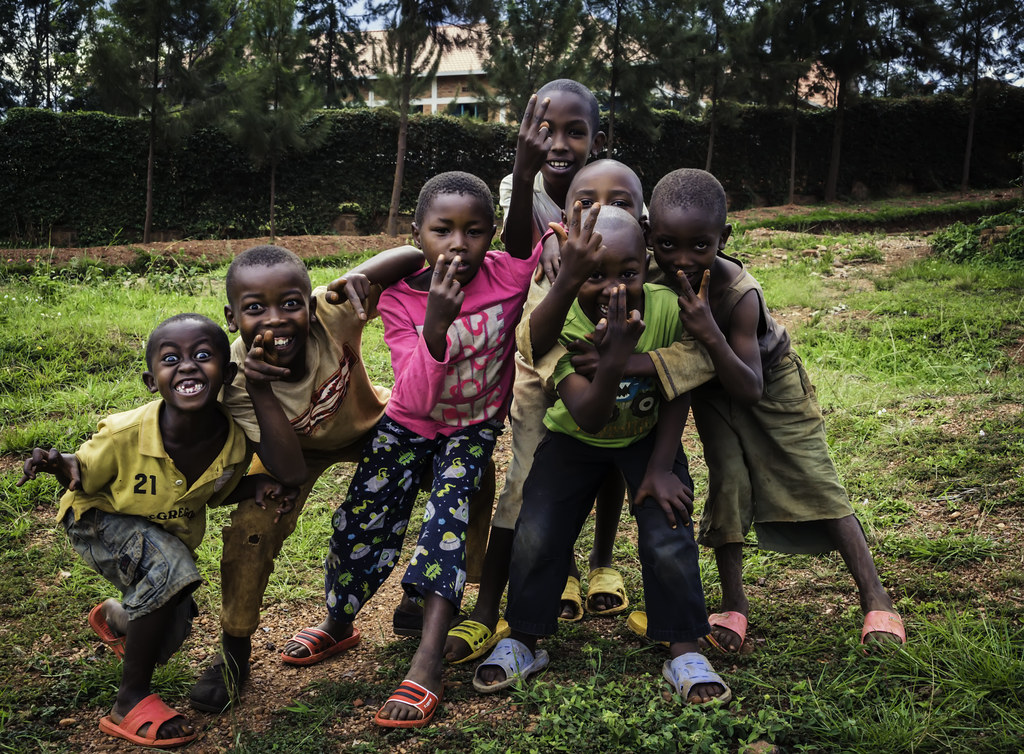
When Kagame became President in 2000 (he previously served as second in command) he set out about establishing a bold vision for Rwanda. The 1994 genocide had wrecked the economy and, whilst humanitarian aid was crucial in rebuilding the country, Kagame recognised the need for sustainable growth.
Thus began a twenty-year development project, with the lofty ambition of turning Rwanda into a middle-income country. Kagame sought to do this by transforming a largely agricultural economy into a knowledge-based society – in a spirit of social cohesion and equality. And its main focus would be its greatest asset – the people of Rwanda.
Singapore model
For inspiration, Kagame looked to Singapore – a country that, despite having no natural resources, has grown to be a global financial hub. In emulating their economic policies, the Rwandan economy has been utterly transformed.
Their service sector now contributes an estimated 52% of GDP – in a country where 90% of the population still work the land. And, thanks to the removal of red tape, Rwanda is recognised as one of the easiest places to do business on the continent (only South Africa and Mauritius rank higher).
Kagame has not just borrowed economic policy. His style of government can be directly compared to the authoritarian management favoured by the late Singapore premier, Lee Kwan Yu. And according to a report by The Economist in 2012, it is the rule of law that sets him apart from other African countries.
This has strengthened institutions and allowed Kagame to successfully fight corruption. Rwanda is now the fourth-least corrupt country in Africa. And whilst that might not seem like something to shout about, it puts them on a par with Italy, in the global rankings. To give you some further context, the UK ranks 12th on this list, whilst Russia comes in at 137th.
Present-day Rwanda
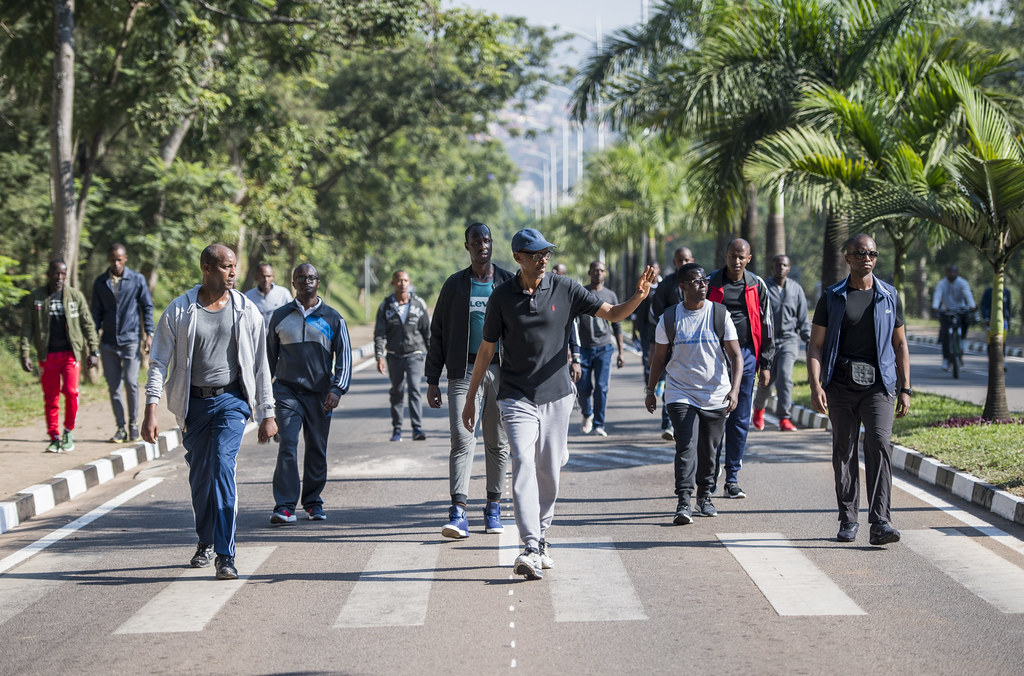
Rwanda is now said to be one of the safest countries to visit in Africa.
This has no doubt benefitted tourism, with numbers up year on year. Many flock to see the country’s large population of mountain gorillas. But trips that take in the country’s other various flora and fauna (think giraffe, zebra, hippos and lions) are also becoming increasingly popular.
Even the sophisticated capital of Kigali is said to be like few others on the African continent. The traffic is manageable, the air is clean and there is precious litter on the streets. This latter fact is partly due to the government’s ban on plastic bags. But it is also down to another curious initiative – known as Umuganda.
Umuganda literally translates as “working together”. Once a month, it sees Rwandans take to the streets and engage in work that benefits their local community. Initially, this simply involved keeping the streets free from litter. But it now sees citizens planting trees and even helping to build houses. And it is compulsory for all able-bodied citizens – including the President himself.
Looking ahead
Given that Vision 2020 is now coming to an end, many will be asking whether it has been a success.
The country is certainly now richer, cleaner and safer – the latter especially true in regards to its neighbours. Furthermore, Kagame’s efforts to unite a people wrecked by violence, through initiatives like umuganda, cannot be understated.
But given that half of the population still lives in poverty, critics are right to ask whether maximum growth – at any cost – has been for the benefit of all. Whilst others may wonder whether his single-minded, authoritarianist approach (in the Democracy Index 2020 by The Economist Intelligence Unit Rwanda’s government is classified as an ‘Authoritarian regime’) is in the long-term interests of a country with its stated ambitions.
Where Rwanda goes next, will surely provide our answer.
Sources
https://www.transparency.org/en/news/cpi2018-subsaharan-africa-regional-analysis
https://www.npr.org/sections/goatsandsoda/2018/07/18/628364015/how-rwanda-tidied-up-its-streets-and-the-rest-of-the-country-too
https://www.worldbank.org/en/country/rwanda/overview


