


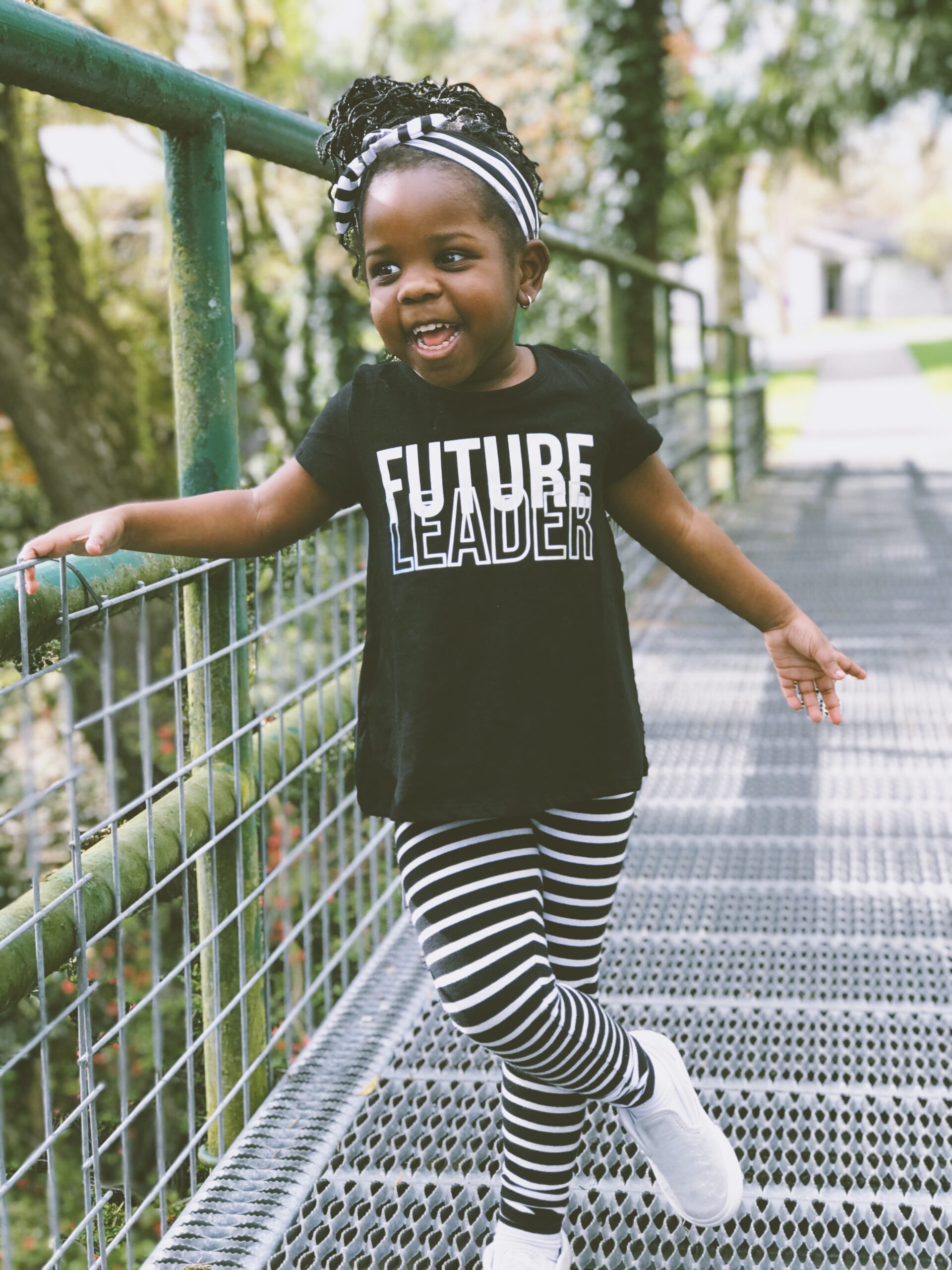
Our list of African leaders shows that leaders can be found in every discipline.
They show us new ways of thinking, inspire us to change and, crucially, warn society when it runs off course.
Here we highlight a (very) short list of African leaders: the work of an artist, a social activist, a computer scientist and a filmmaker – all of whom represent the next generation of African leaders.
Ilwad Elman
First on our list of African leaders is Ilwad Elman. Perhaps it was destiny that Ilwad Elman was to become an internationally renowned activist. After all, her late father, Elman Ali Ahmed, was nicknamed the “Father of Peace” in her native Somalia.
He was assassinated in 1996 whilst helping to rehabilitate child soldiers. And the NGO that she now runs with her mother, the Elman Peace and Human Rights Centre, was established in his honour. Today it continues much of the work that he started, including the pioneering “Drop the Gun, Pick up the Pen” programme.
Raised in Ottawa, Canada, Elman returned to Somalia in 2010. She has since established several programmes of her own at EPHRC including Sister Somalia, which led to the creation of the country’s first rape crisis centre. She remains committed to rehabilitating child soldiers, often employing novel methods, as well as campaigning for the inclusion of women in peacebuilding.
Mentored by the late Kofi Annan, and nominated for the Nobel Peace Prize in 2019, she continues to work tirelessly for her fellow citizens.
Wanuri Kahiu
Second on our list of African leaders is Wanuri Kahiu. Wanuri Kahiu is a Kenyan filmmaker putting the stories of black women front and centre. But she is also an artist who is not afraid to break down boundaries.
Her debut feature, From a Whisper, takes place in the aftermath of the US Embassy bombing in Nairobi and captures the lives of the victims and their families. Here’s a trailer from the film.
A striking contrast to From a Whisper is her 2009 film Pumzi is a science fiction short that celebrates Afrofuturism.
But it is her 2018 feature, Rafiki, which caused the biggest stir. Billed as the first Kenyan film to be screened at the Cannes Film Festival, it also made headlines for being banned in Kenya. For Rafiki tells the story of two young women that fall in love – anathema for the Classification Board in a country that still criminalises gay sex.
Kahiu openly expressed her frustration at this decision given that “it was made by Kenyans, for Kenyans and now Kenyans can’t watch it”. But she continues undeterred and is now said to be involved in bringing Octavia E. Butler’s book Wild Seed to life.
Joy Buolamwini
The third on our list of African leaders is Joy Buolamwini. Ghanaian-American Joy Buolamwini describes herself as a poet of code. This somewhat unique title reflects her work as a computer scientist, digital activist and creative science communicator.
As an undergraduate at Georgia Tech, she discovered that there was considerable bias in AI-powered facial recognition software. The problem? It could only recognise white faces.
Her research into this controversial subject has taken her to the University of Oxford and MIT. Her MA thesis, at the latter, uncovered both racial and gender bias in AI software – at companies such as Amazon, IBM and Microsoft. And it led her to form the Algorithmic Justice League, in order to create AI that is both “equitable and accountable”.
After the first wrongful arrest by an algorithm earlier this year, Joy Buolamwini proved just how crucial this work is.
You can view her 2016 TED talk on algorithmic bias here.
Njideka Akunyili Crosby
Last on or list of African leaders is Njideka Crosby. Working out of Los Angeles, Njideka Akunyili Crosby is a visual artist, whose work takes inspiration from people that inhabit liminal spaces. As a Nigerian-American, her pieces are thus self-referential and reflect the identity of someone straddling two different cultures.
Crosby left Nigeria aged 16 when her mother won the US Green Card Lottery. After considering a career in medicine she decided to pursue art – training first at Pennsylvania Academy of Fine Arts and then at Yale.
Inspired by both Kerry James Marshall and by Kenyan-born Wangechi Mutu, she slowly developed her own style. Mutu has remained a mentor and is credited with helping her see that one image could comprise many others.
To some, her work might appear as a mere collage. Yet meaning is so heavily layered in each piece that such a description is at once reductive. She uses both painting and transfers and often incorporates Nigerian portrait fabrics. And she also combines an array of incongruous ideas – architecture, objects, artefacts – all teasing at the idea that a single space can play host to two distinct cultures.
Are you feeling inspired by this list of African leaders?
Sources
https://edition.cnn.com/2019/11/14/africa/time-influential-young-africans/index.html


