


Reasons to visit Ethiopia
Ethiopia is quite possibly the most underrated country in the world.
There are plenty of reasons to travel to Ethiopia; for starters are the magnificent hospitality, food and traditions of the Ethiopian people and the richness of Ethiopia’s cultures. Her tribes include the Surmi, Afar, Mursi, Karo, Hamer, Nuer and Anuak, whose ancient traditions have remained almost unchanged. Another integral part of Ethiopia’s cultures is the festivals, from ceremonies that mark rites of passage to Christian celebrations of singular passion.
Then there’s the Ethiopian handshake…
How about its magnificently rich history? Ethiopia’s history is a long one, and this extraordinary country is a magical mixture of African and Middle Eastern influences that go back possibly to the very beginnings of human history. It is no surprise that there is a wealth of wonderful historical, scenic, and cultural must-see spots to visit. Like most African countries Ethiopia is large, and a two-week visit will have you rushing back just to scratch the surface so, if possible, spend about three weeks if you can manage that.
Any trip to Ethiopia should take in the following gems.
Addis Ababa
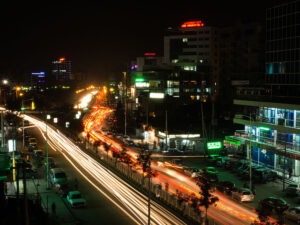
Let’s start with Ethiopia’s superb capital city, Addis Ababa. It is a vibrant, colourful, bustling city with many interesting gems worth a visit. For starters, head over to the best Ethnological Museum in African which is housed across two floors in the former residence of Emperor Haile Selassie. Then visit the Merkato. Considered in Africa to be the biggest open-air market on the continent, it covers an entire neighbourhood. Be brave, dive in. Like any other market in the world, watch your pockets and be prepared to haggle over price.
Next, head to the Piazza, the “old town”, where you will still see some of the Italian influence left by the brief Italian presence in the country. This is a great place to stop for lunch or indulge in the country’s spectacular coffee – or both. Coffee had its origins in Ethiopia, and the coffee culture here is superb. This is a promise: you will not find a better cup of coffee anywhere in the world. Another visit to take in is to the National Museum of Ethiopia, a short 15-minute walk away from the Holy Trinity Cathedral. At the museum, you will find the world-famous 3.2-million-year-old remains of Lucy, the Australopithecine hominid that was discovered in eastern Ethiopia in 1974.
A trio of UNESCO World Heritage sites
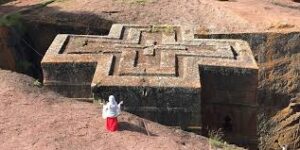
There are many who travel to Ethiopia purely to visit its trio of UNESCO World Heritage sites. These are not to be missed, starting with the rock-hewn churches of Lalibela. There are 11 breathtaking structures. Carved down into the ground from solid rock. The most well-known is Bet Giyorgis. In the shape of a Greek cross, it is a 15m-high three-tiered plinth, and it’s so perfectly constructed that it needs no supporting internal pillars. The inside of the church is as visually stunning as the outside. Think clean lines and filtered sunlight. You will find the two 800-year-old olive-wood boxes inside that are rumoured to have been carved by King Lalibela himself!
Then, head to the stelae fields at the ancient city of Aksum.
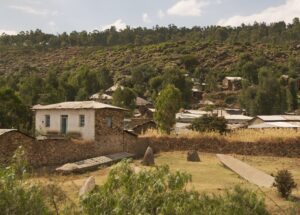
Aksum is at the very heart of ancient Ethiopia and dates to a time when Ethiopia was the most powerful state between Persia and the Eastern Roman Empire. The obelisks, stelae and tombs dating back to between the 1st and 13th century A.D. A visit here is surreal; it feels like you are walking back through time. The Chapel of the Tablet in Aksum is famously believed to house the lost Ark of the Covenant.
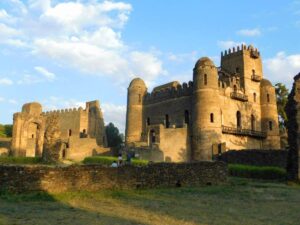
Last in the World Heritage trio are the castles and palaces at Gondar, the most famous being the Royal Enclosure Fasil Ghebbi. The city is well known for having 44 churches and places of worship and holds the festival of Timket every January. The festival celebrates the baptism of Jesus in the River Jordan, and is held on the 10th day of Terr – January 19 – following the Ethiopian calendar*.
The Danakil depression

To travel to Ethiopia and not even plan to visit the Danakil depression is almost a crime. This odd, fascinating, alien-looking landscape is not to be missed. It is both the hottest and the lowest place in the world at 100m below sea-level. Gazing over Danakil you feel as if you are a character in a sci-fi film and have landed on a foreign planet. The depression is covered with volcanos, bubbling lava lakes, salt pans and multi-coloured hydrothermal fields. It really is quite magnificent, especially when you remember that this bizarre-looking landscape sits atop a place where three tectonic plates join, called the Afar Triple Junction, and is continuously moving apart!
Simien National Park
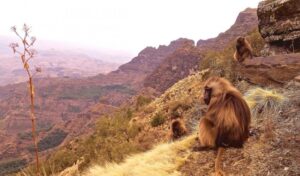
Another trip to plan for when you travel to Ethiopia is to the Simien National Park. The park has been a World Heritage site since 1978 and was established to protect the many rare animals found uniquely here. The landscape is one of the extremes, with high plateaus, cliffs, deep gorges, lowlands, and soft grasslands. It is possible to do camping and hiking trips here as well as guided tours. Well worth a few days for nature lovers and those looking for something more adventurous.
If you do plan to visit Ethiopia, plan well so that you make the most of this fascinating country. Ethiopia is a country like none other; you’ll make the most magical memories as a result of your time in this frankly exquisite country.
* Calendar information. Ethiopia follows a 13-month calendar. There are 12 months of 30 days each and a 13th month, a leap month of five or six days. Additionally, the country works on a 12-hour clock determined by sunrise and sunset. So, be careful when arranging to meet your Ethiopian friends; 7 am is 1 o’clock!


