


A few facts about the beautiful Nilote people of Africa:
Nilote is an ethnicity
The term ‘Nilote’ entails a demographic of people mostly associated with southern Sudan, Northern Uganda and Western Kenya. ‘Nilote’ refers to the area in which these people live – primarily, the upper region of the upper Nile and its tributaries. It also points to a linguistic unity that separates them from neighbours who are similar in both physical attributes and culture.
Among the Nilotes are the Burun speaking peoples, Karo peoples, Luo peoples, Ateker peoples, Kalenjin peoples, Datooga, Dinka, Nuer, Atwot, Lotuko and the Maa-speaking peoples. South Sudan currently has the largest population of Nilotes in Africa.
‘Nilote’ is not ‘Nubian‘
Both terms are often confused, and they are certainly misunderstood. Nubia is a geographical area that straddles southern Egypt and Northern Sudan. The main difference between Nubians and Nilotes is language. The Nubians speak Nubian languages, although increasingly these languages are being lost to Arab languages as a result of Nubian migration.
The Nilotes speak a wide range of languages
Currently, there are somewhere between 29 and 53 languages spoken by Nilotes in Africa. Linguist Joseph Greenberg has broken this down into 3 subgroups:
- Western Nilotic languages include Nuer, Luo and Dinka.
- Southern Nilotic languages include Datooga and Kalenjin.
- Eastern Nilotic languages include Maasai and Turkana.
It was the development of these languages which enabled early Nilotic groups to communicate and prosper.
The Nilotes have a livelihood of livestock
The Nilotic communities have a cultural history of cattle-rearing. The extreme weather conditions of the Nile Valley savannas meant the Nilotes had to keep on the move. From severe droughts to harsh floods, the Nilotes had to constantly adapt to their surroundings. During the wet season, this meant creating settlements above ground-level where they could continue to herd cattle. In the dry season, they moved closer to water supplies and pastures.
The pastoral tradition remains central to the life of Nilotes today. Cattle are ever important for them and are even used as a form of currency. In marriage, cattle hold deep symbolic value and any bidding husband is expected to gift the bride’s family up to 300 cows.
The Nilotes are the world’s tallest people
Extreme weather did not just influence the lives of the Nilotes; it also gave them some unique physical attributes. On average, Nilotes are said to be the, tallest, thinnest and have the darkest skin tone of all Africans. This is down to the heat of central-eastern Africa. Their skin colour allows more UV light to be absorbed, and long limbs and a slender frame allow for heat to be expelled quicker. On average, men are 6ft 4 inches tall whilst women are 6ft 2 inches.
Fun Fact: The tallest ever NBA basketball player is Manute Bol. He stands at 7ft 7 inches and is a Nilote from South Sudan.
Where are the Nilotes today?
The tall height and agile abilities of Nilotic people have allowed them great success across the world, most notably in sports and modelling. Kenya and Uganda have produced countless world-class athletes, from basketball players like Manute Bol to long-distance runners such as Lornah Kiplagat. Nilotes excel in sport.
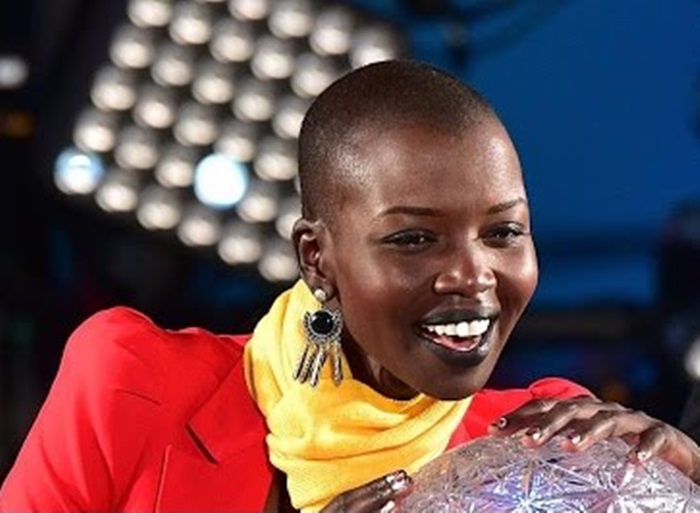
Their long legs, slender frames and beautiful skin have also seen Nilotes flourish in the modelling world. For in-demand model and activist Nykhor Paul, modelling has provided an important platform to inspire everyone back home to know that they can achieve their own success and to promote unity over conflict.
PS: What’s it like being so tall?
On a recent trip to South Sudan by Youtube vlogger Drew Binsky asked a few Dinka people this very question. Here’s the answer:


