


With Covid-19 taking up large parts of the news in 2020, you may have missed some of the important African hashtag activism that dominated social media last year.
The top African hashtag activism of 2020
Angola #VidasAngolaNasImportam
Tensions between the government and citizens of Angola have been high ever since liberation from Portugal in 1979, with the ruling MPLA party repeatedly violating human rights protocols. A good quality of life is the reserve of those who can afford it, whilst the rest of the population have endured poverty, violence and suppression.
The problem lies with the tyrannical MPLA, who want to keep power and wealth within their own bloodlines, and the result is a broken nation with little hope of improvement.
The MPLA have broken the fundamental principles set out in Article One of the Constitution of the Republic of Angola (1992), which states:
“Angola shall be an independent Republic, based on the dignity of the individual and the will of the Angolan people. The Republic of Angola shall be a sovereign and independent nation whose primary objective shall be to build a free and democratic society of peace, justice and social progress.”
Unfortunately, campaigns for a fair and transparent democracy have been repeatedly met with police brutality and false imprisonment. Covid-19 restrictions have only worsened the problem, with police now having more excuses to unfairly persecute people and extort them through fines. Several cases which should have remained civil have resulted in horrific consequences – for example, Dr. Silvio Andrade Dala, 35, died in police custody. His crime? Not wearing a mask, even though he was in his own car, by himself.
It is incomprehensible, but such incidents are commonplace in Angola. In August 2020, Amnesty International reported that seven young men had died in police custody in the previous six months. In October 2020, a protest led to the arrests of 103 people, and most were randomly arrested with no real reason. A state of emergency was declared in March 2020.
The #VidasAngolaNasImportam movement was a plea for people to take note of what is happening in Angola. With social media allowing locals to document their reality, the government are under increasing pressure and global scrutiny. With video footage being released daily of police incompetence and regular abuse of power, it is hoped their future actions may change, but only time will tell.
Cameroon #EndAnglophoneCrisis
The Anglophone Crisis in Cameroon is part of a long-standing conflict between English-speaking (Anglophone) and French-speaking (Francophone) Cameroonians, who have become segregated.
In 2016, Anglophone-Cameroonian professionals such as lawyers, doctors and teachers began speaking out against injustice as they felt under-represented in, and culturally marginalised by, the French-speaking authorities. The Anglophone communities, who reside on the west side of Cameroon, feel their identity has been stripped in favour of the language and customs of their French-speaking representatives.
Any hope of change looks unlikely under a ruthless and unjust government. Over 3,000 civilians have been killed since 2016, villages have been torched, and kidnappings and false imprisonment have become commonplace. These horrors have been well documented, and in most cases were avoidable.
Cameroon’s problems can be placed squarely at the feet of President Paul Biya. In an election marred by fraud in 2018, Biya won his seventh term at the age of 86, and Human Rights Watch were denied entry into Cameroon to investigate.
There has been little hope that things can change for Anglophones in Cameroon. Hope lies with the opposition party MRC gaining power, but their leader Maurice Kamto was arrested along with 200 other party members during protests.
The #EndAnglophoneCrisis hashtag movement sought to highlight the struggles faced by Anglophone-Cameroonians, and so far it has worked. Biya has seen international support revoked, and the U.S has scaled back its security assistance to Cameroon, also cutting trade privileges enshrined in the AGOA (African Growth and Opportunity Act). Similarly, Germany will deny military assistance should Cameroon require it.
These are small steps, but with mounting pressure and new stories surfacing online every day, there is hope yet for Cameroon. Those who once had no voice can now use social media to be heard all over the world.
DR Congo #CongoIsBleeding

DR Congo mines 70 per cent of the world’s cobalt, around 100,000 tonnes a year. Cobalt is a critical component in lithium-ion, and recent demand has skyrocketed due to a growth in the global market for portable electronics and rechargeable batteries.
The mining process is extremely hazardous to both life and the planet. According to the CDC, cobalt fumes can result in the serious condition ‘hard metal lung disease.’ And ScienceDirect reports that radioactive emissions from cobalt mining damage the atmosphere causing cancer in humans, with the children of mine workers more likely to be born with birth defects. Unfortunately, many of these children will then go on to work in the mines themselves.
An estimated 35,000 children worked in the cobalt mines of DR Congo in 2019, and in 2020, a landmark legal battle started against Google, Tesla, Apple, Microsoft and Dell. These firms have been blamed for the deaths and life-altering accidents of Congolese children working in the mines, and are known to use cobalt to power their products. They now have a huge responsibility to put things right.
Anti-slavery economist Siddharth Kara has been one of several who have led the fight against cobalt mining. On a visit to DR Congo, she heard the harrowing story of 15-year-old orphan Raphael who had no way to pay his £4-a-month school fee, forcing him into cobalt mining. Raphael tragically died along with many others when a tunnel collapsed on them. Stories like these, whilst hard for those of you reading this to fathom, are no surprise in DR Congo.
The #CongoIsBleeding hashtag movement of 2020 hoped (and still hopes) to get the world talking about the issues in DR Congo. Not only the devastating impact of cobalt mining, but the sheer amount of conflict and murder that clouds over the nation. Since 1996, six million Congolese people have been killed, half of them children.
Congo is far from being the ‘Democratic Republic’ of its name, and a lack of stability, leadership and democracy means no clear resolution is near. But one step at a time and with the power of social media, the future has the potential to appear better than the past.
Guinea #PrayForGuinea

In October 2020, Guinea’s President Alpha Condé was re-elected with a majority vote in an election clouded by controversy. Seven months earlier, Condé had changed the Guinean constitution, wrongfully allowing him to bypass the two-term rule and become president for the third time.
Condé’s controversial third term in power triggered months of deadly unrest, and so Guineans took to the streets to protest against the corruption and abuse that stole their democracy. However, their non-violent protests were met with excessive force from authorities, and since October 2020 there have been over 100 deaths in police hands. Human Rights Watch reported that these unjust actions were largely the result of political affiliation, or being in the wrong place at the wrong time.
Such harrowing scenes sparked the #PrayForGuinea movement, with videos shared online of violence on the streets, along with thousands of messages of support. Much more needs to be done.
Condé and his government have failed to take accountability for destabilising democracy in Guinea. The fight continues, but with more awareness, particularly thanks to social media hashtag activism, there is at least hope that the next election might be different.
Namibia #ShutItAllDown

The #ShutItAllDown movement began in October 2020 when young women marched the streets of Namibia to demonstrate against gender-based violence.
Months earlier, the Namibian Police Force had released reports of 1,604 rapes on women in the previous 18 months – the equivalent of three a day. There was also a daily average of 66 reports of domestic abuse, and not enough is being done by Namibian authorise to create a safe society for women and children.
Luna Zhakata is an 18-year-old student and activist from Namibia who has documented her experience of growing up as a young woman. For her and countless others, it is a struggle: “Every day of my life I have to make sure no man can harm me whilst mentally and physically preparing for the fact they might. Attending a party or leaving the house alone in dark may result in the loss of life.”
For girls like Luna, the #ShutItAllDown movement is crucial in spreading the word of female suffering in a male-dominated country.
The news of Shannon Wasserfall’s murder in October brought protests to a boiling point. Luna added, “Shannon’s murder created state-wide shock, pain and rage. The authorities failed her, as they had countless other women and girls in the past. This story became the most prominent on social media.”
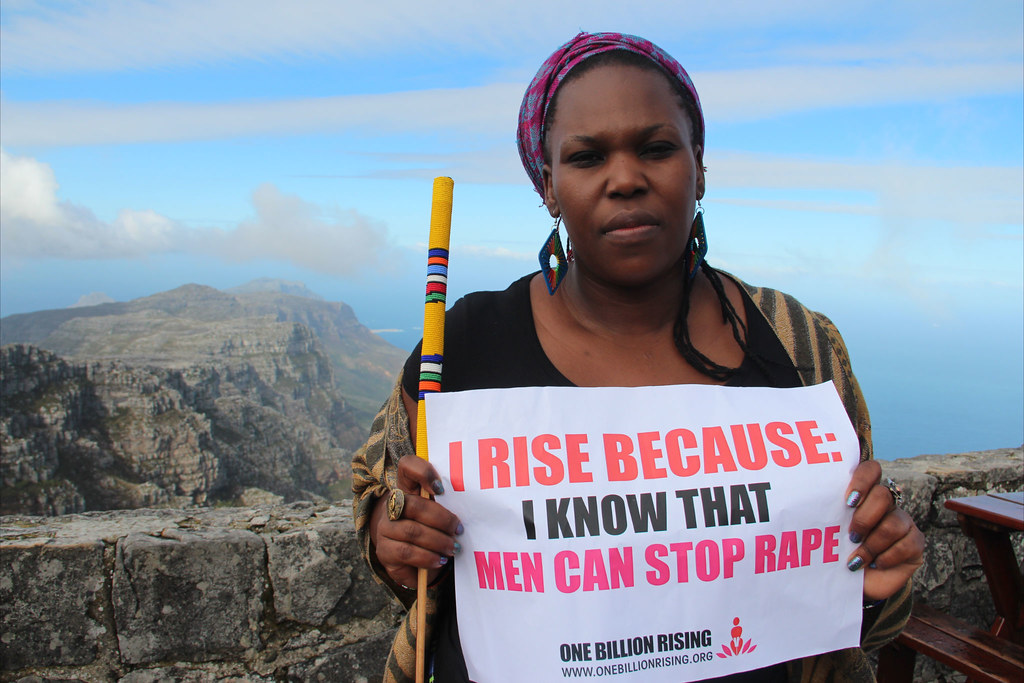
The #ShutItAllDown movement has offered an outlet for Namibian women, so often silenced, to make their voices heard. One female protestor held a sign reading, “Words cannot truly explain how terrified I am to exist as a woman in Namibia.”
Going forward, the government must take measures to make Namibia safer for women and children.
Nigeria #EndSARS
The #EndSARS movement began back in 2017 on Twitter. Fast-forward to 2021 and the message is still as important as ever in Nigeria.
SARS stands for Special Anti-Robbery Squad. This unit of the Nigerian police was founded in 1992 to apprehend robbers and kidnappers, and protect the nation. However, SARS have become guilty of the crimes they are supposed to prevent, such as executions, kidnappings, torture, and rape. Amnesty international released a report in June 2020 containing numerous instances of abuse in the previous three years.
Despite mounting pressure, the government has not done enough, and SARS are still committing terrible acts of terror on Nigerian citizens.
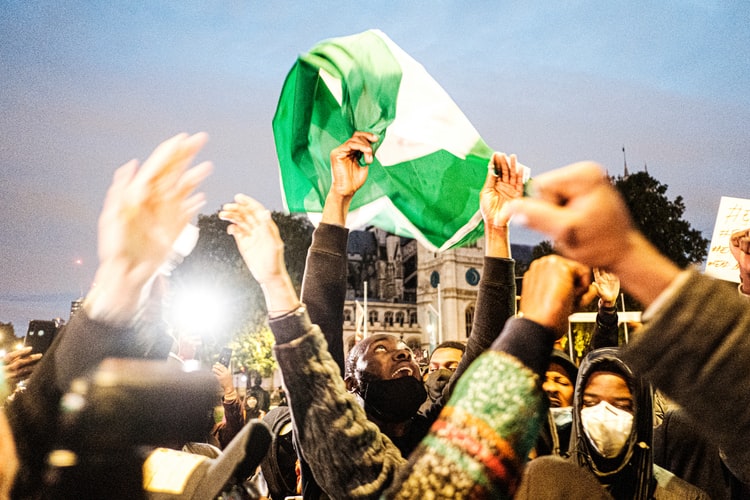
The #EndSARS movement reached tipping point in October 2020. After months of peaceful protests and marches, the Nigerian authorities chose to open fire on #EndSARS protestors who had congregated at Alausa and Lekki Toll Gate Lagos. Reports state that officers opened fire without warning, and 12 people were killed with hundreds injured.
It was also reported that CCTV had been removed by government officials before the shootings in an attempted cover-up. Mobile phone footage had already been shared online under #EndSARS, possibly preventing the situation from becoming even worse.
With thousands across the world keeping an eye on developments online, the Nigerian government must come clean on the cover up at Lekki Toll Gate and hold those responsible accountable. They must also uphold the 2017 Anti-Torture Act to ensure it is outlawed.
Whilst questions remain as to how much more the #EndSARS movement can achieve, there are no doubts that it has unquestionably changed Nigeria. The movement led to special emergency helplines and legal aid to those Nigerians wrongfully prosecuted.
Blogger and columnist Japheth Omojuwa believes that it is these small steps which will change the future landscape of Nigeria. He argues that the authorities must stick to their recent promise of reform and bringing errant policemen to justice.
South Africa #AmINext
In September 2020, South Africa mourned the loss of 18-year-old student Uyinene Mrwetyana, who was raped and murdered. Her horrific ordeal was all too familiar for a country that has been plagued by violence towards women, and change must happen.
Uyinene ‘Nene’ Mrwetyana was a student with her whole life ahead of her when she went to collect a parcel from a Claremont post-office, but was asked to return later. When she returned, the same postal worker locked her inside and committed his brutal violations against her. The postal worker has since been charged, but South African women still live in constant fear that it could happen again.
Just a week later, South African female boxing champion Leighandre Jegels was shot dead by her partner. Fourteen-year-old Janika Mallo was found raped and beaten to death in her grandmother’s garden, and there were two more rape and murder cases in Cape Town. In a haunting statistic, one woman is killed every three hours in South Africa.
Uyinene’s face has become the poster of the #AmINext movement, and has been endorsed by several public figures including Meghan Markle, Duchess of Sussex. The movement’s name is a constant reminder of the fear South African women endure each day – in 2019, around 2,700 women and 1,000 children were murdered by men.
President Ramaphosa has likened such figures to war, and as he says: “There is a dark and heavy shadow across our land. Women and children are under siege. South Africa is one of the most unsafe places in [the] world to be a woman.”
The #AmINext movement has been the important first step, but many more must be made to create a nation where women and children can feel safe at all times.
Final thoughts
These digital social media protests have underscored the unrivalled power of the internet to highlight the plight Africans worldwide. Hashtag movements are a rallying cry to all of the world, not only Africans, to unite and demonstrate for the rights, safety, and future of their fellow human beings.
With support pouring in from around the world and from high profile figures, those in need have taken a step to regain a voice in the fight against their struggles.
Have any comments? Let us know in the Comments box below.
Sources:
https://www.hrw.org/news/2020/12/14/relentless-crackdown-guineas-opposition
https://www.globalcitizen.org/en/content/shutitalldown-gender-violence-namibia-activist/


