


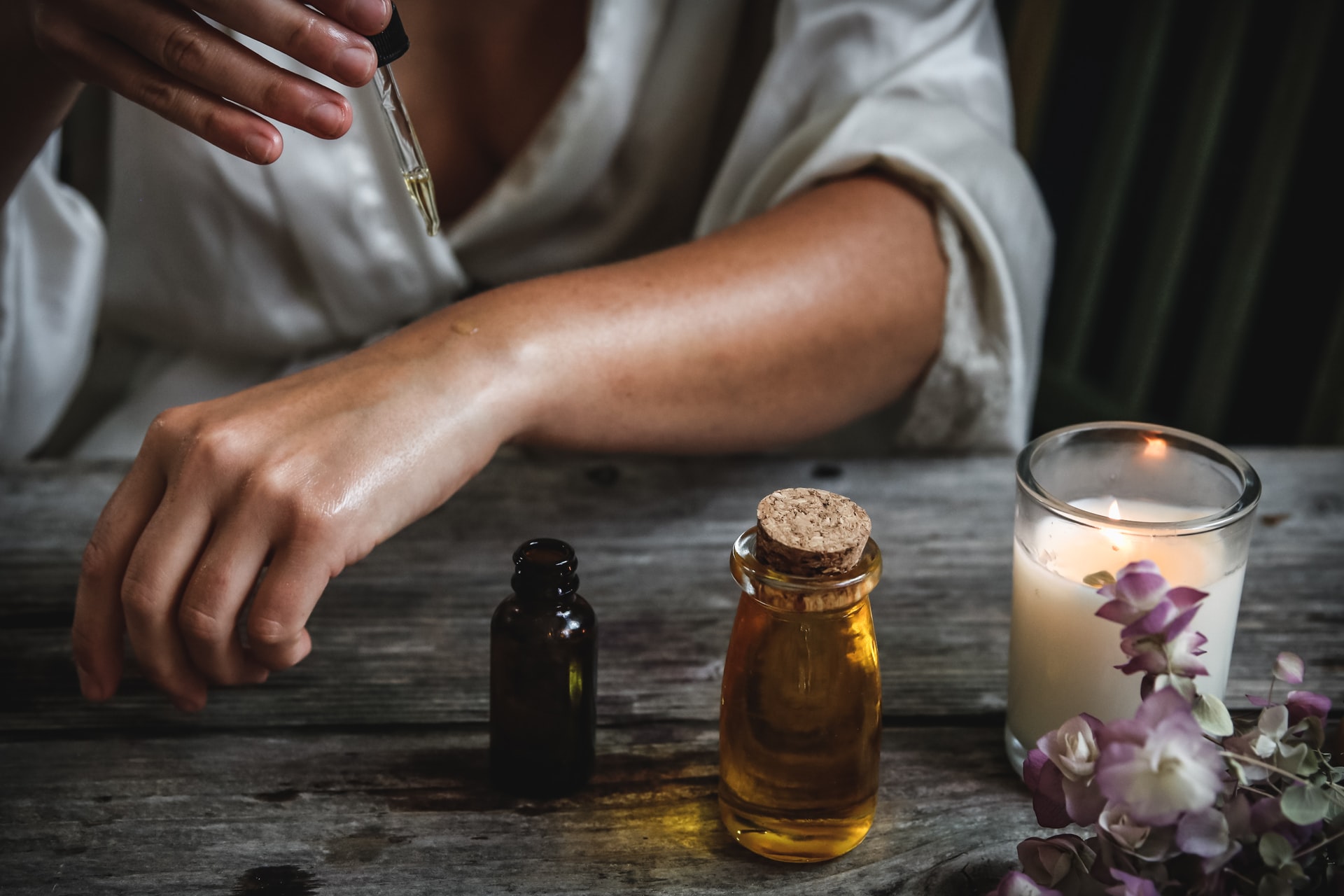
Oils are the hero beauty product – used for skin care routines, injecting moisture into dry hair, reducing the appearance of stretch marks, treating certain skin conditions and so much more. There are not many beauty problems that oil cannot solve. Argan oil is the ‘newest’ star on the beauty scene, with exports from Morocco booming in recent years. The benefits of argan oil are so numerous and the extraction process so laborious that it has been nicknamed ‘liquid gold’. So, what exactly is this oil and how can you use it?
History
Argan oil may be a new product on the international scene, but it has ancient roots and dates back to 600 BC in Morocco, where it was first used for its healing properties. It was later used by the Berber people and it was in this time that argan oil became ingrained with Moroccan life and culture. The wood from the argan tree was used for the fires, the fruit to feed the animals and the kernel to make a paste that can be eaten with bread. After a failed attempt to bring argan oil to Europe in the 1500s, argan trees were often felled in order to clear space for crops the Moroccan government believed to be more lucrative. It was only in the 1990s when scientific research discovered that argan trees and oil had great value, that the production of argan oil as we know today began. In fact, argan forests are now declared protected under the UNESCO biosphere reserve.
Production
Argan oil is extracted from the kernels that grow on the tree. Until the process was largely mechanised, the oil used to be extracted in a rather unusual manner. Goats love the fruit that contain the kernels and they climb the trees to eat it. This led goats to play a very important role in the production process – they ate the fruit, removed all of the flesh and the ‘cleaned’ kernel was extracted from their dung. This sped up the process immensely for producers, but luckily for us today the process is a whole lot more hygienic!
Whilst large swathes of the production of argan oil is now mechanised, there are still cooperatives of Berber women who produce the oil by hand. They collect the fruit, crack the nuts by hand and extract the oil by a cold press machine. The number of cooperatives only grow as tourism in Morocco increases, most offer a tour package where they show you the extraction process and have a shop where you can buy the products they produce. Cooperatives are highly beneficial as they ensure that argan oil is kept as a traditional Moroccan product and protect it from the complete domination of foreign producers.
Benefits
So now we know the history and production process of argan oil. But what are the benefits and what can you use it for?
- It contains multiple essential nutrients, including a high level of vitamin E. It will make your skin glow in no time.
- It has amazing antioxidant and anti-inflammatory properties. Some studies have shown that if put on a skin injury, it can reduce the inflammation and thus speed up the healing process.
- It can reduce the appearance of wrinkles; the incredible anti-inflammatory properties promote skin elasticity and hydration.
- It’s fabulous at promoting hair health. You may notice that argan oil is the star ingredient in hair care products. This is because argan oil can increase moisture and reduce breakage and frizz. It is the ultimate hair smoother.
So, there we have it, a whirlwind tour of argan oil. Is argan oil your must have beauty product? Did you learn anything about the production process that surprised you? We would love to know your thoughts.
Sources:
https://thrivemarket.com/blog/what-is-argan-oil
https://www.healthline.com/nutrition/argan-oil#TOC_TITLE_HDR_14
https://theculturetrip.com/africa/morocco/articles/history-of-moroccan-argan-oil-in-1-minute/
https://www.beautylish.com/a/vzyxy/the-curious-story-of-argan-oil
https://arganoildirect.com/argan-oil-production-and-women-co-operatives


