


Numerous sustainability projects – too many to count – across Africa are already making a significant impact on sustainable development practices. Below are true African leaders – ordinary people doing extraordinary things – ushering in real change in a variety of ways.
Mali’s Inna Modja and the Great Green Wall
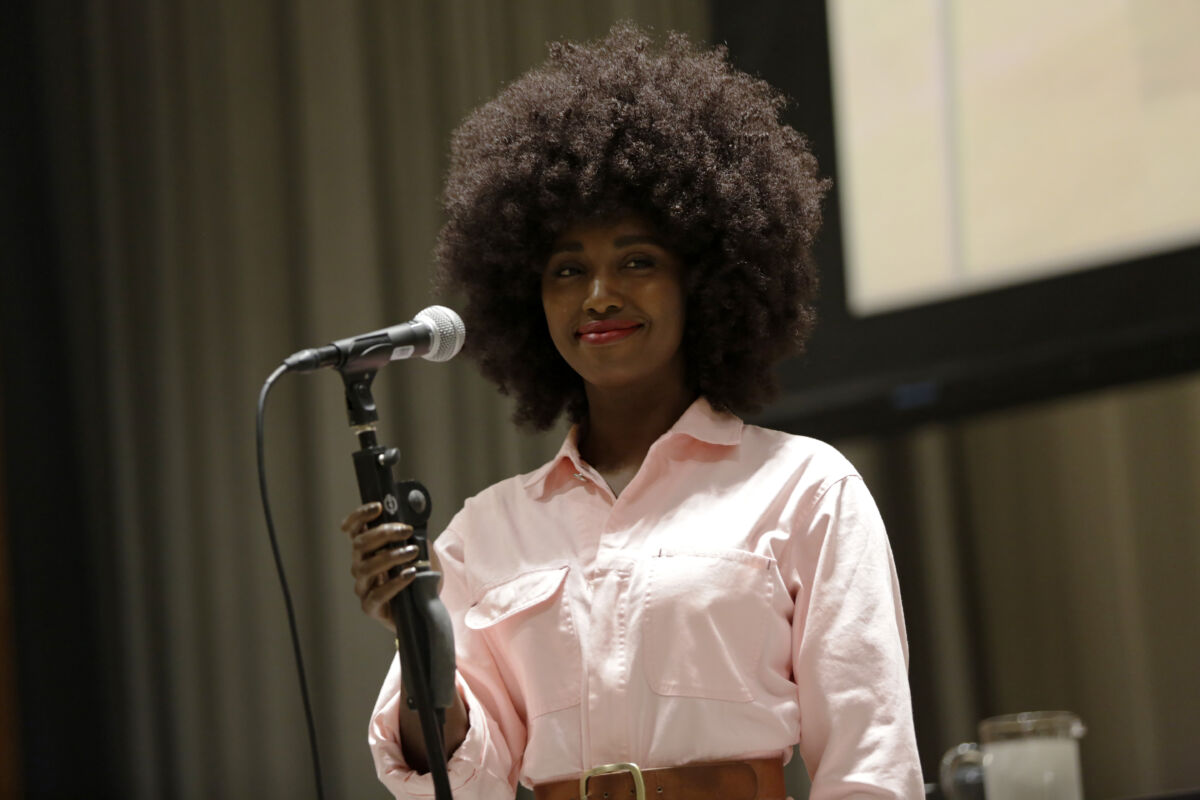
‘Restoring the land is a matter of survival’
Inna Modja, Malian musician and human rights campaigner
A hit singer in France and a well-respected human rights campaigner who has spoken out effectively against pressing problems such as female sexual mutilation, Inna Modja’s activism is now focused on using her voice and her platform to bring attention (and desperately needed funding) to the Great Green Wall project. The project, which was launched in 2007 by the African Union, supported by the Great Green Wall documentary (executive producer is the City of God co-director Fernando Meirelles, who worked with the UN), focuses on the impact of the degradation of the Sahel region, a semi-arid area south of the Sahara Desert. The initial goal of the project was to build a ’green wall’ of trees stretching 5,000 miles across the Sahel, from Senegal to Djibouti. This hasn’t happened.
Significant obstacles – notably funding – have led to refined goals: now, the project seeks to restore 100 million hectares of land and sequester 250 million tonnes of carbon by 2030. So far, 12 million drought-resistant saplings have been planted in Senegal.
The Sahel faces extreme soil degradation along with sundry other problems: drought, severely limited agricultural resources and desertification. Throw in climate change – and the result is a toxic mix of socio-economic and political crises: radicalisation of young people, mass fleeing of the area (the filmmakers predict that up to 60 million people may try to flee by 2050, if the problems in the region are not addressed).
Against this reporting, however, is a counter-narrative: “while – on the surface – [the region] seems to suffer from water scarcity, is not short of water resources. The Sahel has large trans-boundary regional watersheds and groundwater reservoirs”. Although this does not minimise the enormous difficulties facing the area, it highlights the need for a multipronged approach, including using technology, to healing the wounds of the Sahel.
Nevertheless, it’s a fascinating project that deserves all the support it can get. Watch the trailer here, or, better still, watch the documentary, which also offers plentiful insights about the countries through which Modja journeys- Senegal, Mauritania, Mali, Burkina Faso, Nigeria, Chad, Sudan and Ethiopia- as she promotes the concept of the wall of trees.
More information: greatgreenwall.org
Oluwaseyi Moejoh and the U-Recycle Initiative
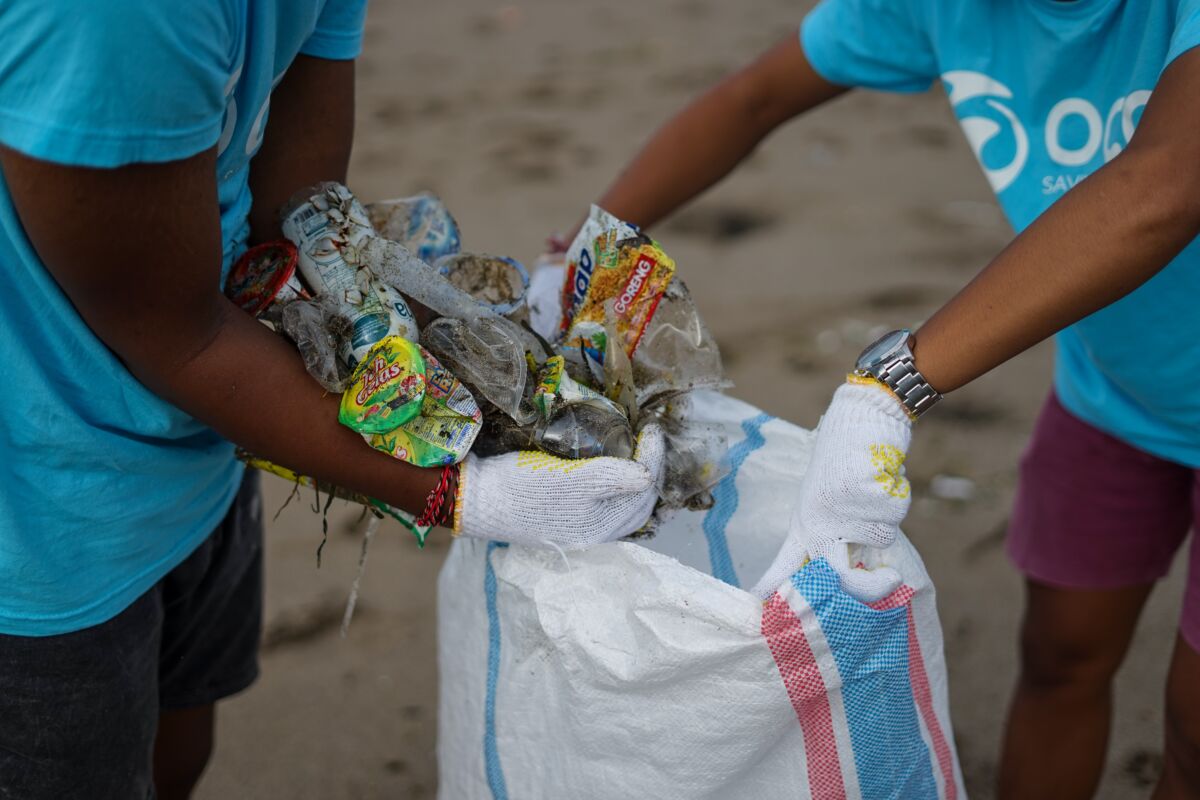
Environmentalist Oluwaseyi Moejoh’s recycling initiative is a youth-led project “focused on advancing a circular economy in Africa.” The Nigerian law student’s star is very much in the ascendant: she is a recipient of the 2020 Youth-in-Development Fellowship by SOZO networks sponsored by the US embassy, a 2020 Africave fellow and a 2020 Squad Leader at the Ocean Heroes Network. Moejoh has also been featured in numerous local and international media and radio stations, including BBC World Service, International Recycling Today Magazine in recognition of her changemaking work. This vital work sees her collaborating with others from across the globe to “implement sustainable, deep-rooted and innovative solutions to mitigate environmental pollution.”
In 2020 Moejoh hosted the continent’s first-ever ‘Litterathon’ in Lagos, whereby almost 100 Africans were challenged to pick up as much rubbish as possible, using the specially designed, interactive Litterati app. In an interview for the Ocean Heroes Network, the formidable campaigner said:
“Our actions matter! Our planet needs you to act. I believe you have a lot in you to create change, and there’s a lot you can do to mitigate plastic pollution. You can start with the 3R’s (Reduce, Reuse Recycle). You can LEARN more about the problem, DITCH unnecessary single-use plastic (like plastic straws, cutleries, styrofoam etc.), SWITCH to eco-friendly metal or bamboo alternatives, and lastly EDUCATE others about the need for them to act too. Lastly don’t forget to Stop Littering! It is very harmful to our environment. You can join us on our next #LitterathonChallenge.”
Nzambi Matee – the brilliant Kenyan woman that’s turning trash into cash
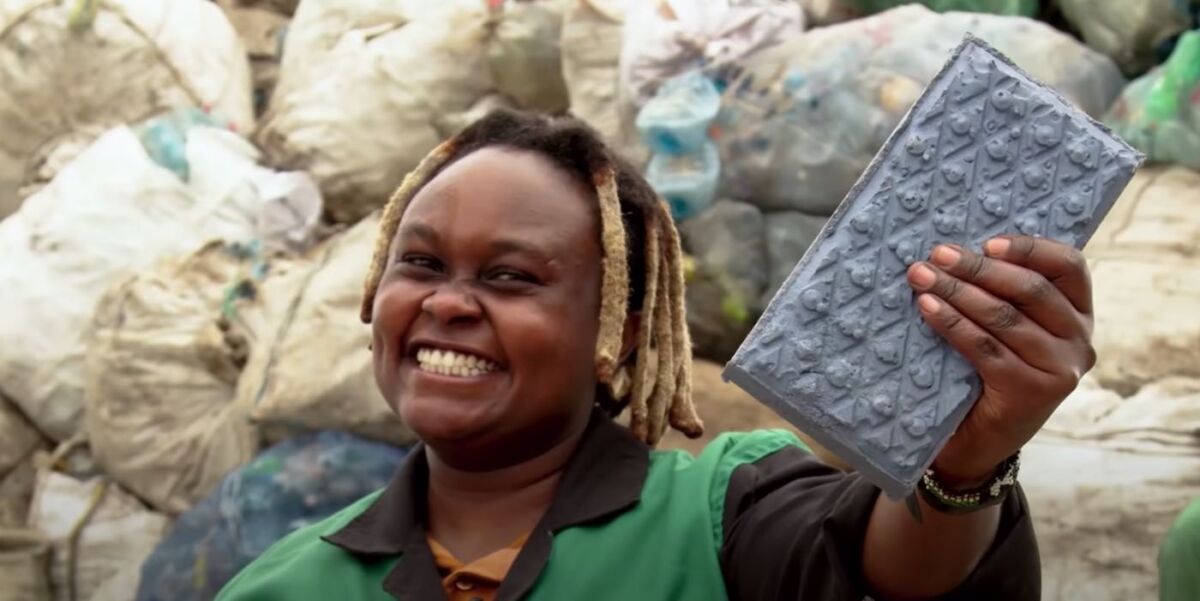
Nzambi Matee’s company Gjenge Makers combines waste plastic and sand and turns this into paving bricks. To date she has turned around 20 tonnes of plastic trash into paving bricks that are stronger than concrete, making them ideal for building paths around schools, for example, and replacing dirt roads.
Matee was deservedly named Young Champion of the Earth by the United Nations Environmental Programme.
Father Godfrey Nzamujuo – the Nigerian pastor with an ingeniously simple idea

Engineering and Science graduate and former University of California professor Father Godfrey Nzambujo felt a calling to rescue his people from, as he put it, “dying of starvation.” He responded. Armed with his scientific knowledge, one acre of land, his mission, vision and, importantly to him, his faith, Father Godfrey’s farm, Songhai, was born. The farm is named after the Songhai Empire, which was one of the most advanced civilizations of Western Africa in the 15th and 16th centuries. For Father Godfrey, Songhai is a symbol of an African renaissance that sees agriculture, particularly regenerative agriculture, as the solution to Africa’s trifecta of problems: food insecurity (according to the UN more than 820 million people are facing hunger globally), environmental degradation and unemployment.
The farm runs on the principle of zero waste. What this means, effectively, is that at every level, by-products (eg chicken excrement) from one area are used in another area. So, for example, crop waste feeds animals and their waste is turned into biogas – a natural fuel that powers the farm.
Father Godfrey has achieved enormous success. His sustainable development methods have been adopted across West Africa, and he has trained 30,000 people from all over the world in his methods. He also runs eco-literacy development programmes, including 18-month long courses for entrepreneur-farmers as well as one-off courses, such as his course on irrigation techniques. He himself employs 300 people; they harvest the crops, oversee composting or service the biogas digester.
Although zero-waste farming itself is not new, what Father Godfrey offers to so many is a new way of looking at the world – in particular, our connectedness with our environment. And it’s working.
Selassie Atadika at Midunu restaurant, Accra, Ghana
The creative force of Midunu is the trailblazing, Ghana born, New-York raised Selassie Atadika, whose experience as a founding member of the Senegal nomadic restaurant Trio Toque helped her to create Midunu’s ‘New African Cuisine’ concept. The restaurant, which takes its name from the Ewe translation of ‘Let’s eat’, has four distinct offerings: Midunu House, a bespoke event space; off- and on-site private dining; nomadic dining and artisanal chocolates.
Selassie champions eco-friendly foods, privileging those that are seasonal and are suited to Ghana’s climate as well as overlooked foods such as jackfruit and breadfruit. Goat, popular across West Africa, is a popular presence on the menu, slow-cooked and infused with spices.
Another string to Selassie’s bow is her not-for-profit Midunu Institute, which she set up to advance “consumer health and awareness” and create “new economies through the understanding and use of indigenous African ingredients and culinary knowledge”.
Noting that Ghana, like many other African countries, is on an “unsustainable path” (Ghana is a net importer of food and a net exporter of cash crops), the Institute’s solution is to train young Ghanaians as ambassadors to document traditional culinary practices in targeted regions of the country. Why? To ignite a positive shift in behaviour regarding the relationship of Ghanaian consumers with the food they eat; notably, the role of culture in food and agriculture. The programme, run concurrently to the training, also comprises a multi-media campaign to highlight the challenges and successes in protecting indigenous culture and traditions.
21 Sixth Rd, Accra, Ghana; +233 24 3316580
BONUS
Travel with purpose. Travel with Responsible Travel (UK)
“We need to make a profit, but we see this as no more or less important than our wider responsibilities.” Responsible Travel Mission statement
If you want your travel to Africa to have a positive impact on communities there, consider Responsible Travel as your travelling companion. The company is described as an “activist travel company offering over 6,000 responsible holidays”, and it is one of the world’s largest green travel companies.
Opt for one of their Volunteer holidays and experience the extraordinary. You could find yourself getting stuck into all manner of impactful projects, from caring for rescued animals in Namibia to helping to rehabilitate orphaned monkeys in South Africa.
Who would you add to the list above? Let us know in the comments – we read every comment!
For more sustainability in action, read about the African chapter of the sustainable development goals book club.


