


Award-winning Victoria Grace is a West African and British fusion clothing brand, focusing on upcycling, sustainability and social justice.
Founder Jennifer Ronne left her home in the UK for Nigeria, looking to extend her family. She ended up nurturing considerably more and, after a series of serendipitous events, her stunning, tailored line, Victoria Grace, was created. Greater than a conscious collection, Victoria Grace is an awe-inspiring entity with a conscience.
Across continents and Zoom, we conversed about Victoria Grace as a business and what it means to Jennifer.
How would you describe your brand, Victoria Grace?
In three words – sustainable, stylish, society. I always knew that whatever first impression you give, it lasts and it counts. So Victoria Grace clothing is pleasant to the eye, it is of African and British heritage, colourful, unexaggerated and has an old-world, stylish elegance. It gives you confidence and helps you speak visually. The word ‘sexy’ doesn’t fit into my brand. It says ‘I had a good feeling for that person’. It is adaptive; I try to ‘break’ the dress so it can be worn up or down or accessorised.
Being comfortable is also important as a woman’s body changes. People don’t talk about that and it is real. You don’t stay 21 or 22 forever. Hormones and childbirth change your body’s shape and a woman’s confidence can erode because they want their body how it used to be. So on this journey, we can still wear clothes that give us room to achieve what we want to achieve in everyday life.
The name ‘Victoria Grace’ and the logo – what is the story behind it?
Well, Victoria stands for victory and driving towards it, whatever that means to you. Grace is unmerited favour. I am a Christian so for me, it is by the grace of God. The horse stands for strength and power and I have always admired its image.
How have your UK and West African lived experiences shaped the brand?
I’m a Britain-born Nigerian and my husband is German. My professional background is varied: I was a PR consultant, a Vogue and Calvin Klein employee and an investment banker. I also had a degree in marketing and a masters in financial derivatives. I then relocated to Nigeria, where I became the General Director for the Nigerian German Business Association Chamber of Commerce. My influences come from having lived in Europe most of my life and then in Africa.
For example, all my clothes are a combination of both cultures, except for the ‘O’ dress which is a 100% African heritage dress. I need to wear an outfit that works in both.
What is your typical day or week like?
It varies, depending on what stage the business is at. There are so many details: technical, social, administrative, creative, and ethical and sustainability issues that need to come together. It’s about making sure the wheel goes round and is oiled every day. You have to applaud people who have this kind of job because it’s much harder than any day job.
What initial idea led you to create your business?
Whilst I was working for the Nigerian-German Chamber of Commerce, I realised the country needed to move away from the over-dependence on oil and towards reviving the textile industry. The cultural fashion industry was growing here, so I had the opportunity to speak with key ministers and the right players about how to revive this trade. Whilst I was doing that, I spoke to a large fashion platform about wanting to start a clothing business who replied with, ‘why don’t you do it now?’ and ‘we have a slot on the runway in London at Olympia if you’re interested’. I thought, ‘I’ll take it’. So I ran down to the markets and then just trusted my instinct. I picked African fabrics and blended them with others, putting around ten pieces on the runway.
Later, a buyer from Anthropologie who was there asked for five of my pieces. It made me realise that yes, I can be and am a designer, although I didn’t have the designer background.
Were you aware of the environmental and societal effects of fast fashion before becoming an entrepreneur? What was your light-bulb moment?
When I came to Togo with my husband, I found a huge market and an enormous landfill. You had people coming in at the end of the day, picking up fibre shreds and deadstock (unwanted fabric rolls from other designers) in wheelbarrows. Then they would set them on fire on agricultural land every day. That led me to think, ‘well somebody has to do something about this.’
What is your definition of a conscious producer?
Someone who does not just think about herself and profits, but also about society, sustainability and style. Not putting something out there that you have to learn how to like because it has a ‘good story’. Making it beautiful.
You mention on social media that slow fashion is firmly established in West Africa due to necessity. Has the communities’ ingrained familiarity and openness of slow fashion enhanced the success of businesses?
Yes, most definitely. In this part of Africa, your clothes are tailor-made. You don’t go to a big store and buy off the rack every few weeks. People are used to heritage clothes being made for them and our tailored services provide that. People also do not have the luxury or mindset to buy outfits for each season like in Britain; they want something that lasts.
You advocate for and pay fair wages, employing expert artisans with differing abilities and backgrounds. Why are these issues important to you?
I’m drawn to people. I saw ladies here attempting to tidy up second-hand and ruined clothes, scraping the bobbles off jumpers and stitching holes together. There were hundreds of them, by sewing machines with their babies on the floor or on their backs. But by the end of a day, they were only earning about $1 and I just thought… ‘that’s nothing; it’s wrong.’
What are the economic and societal differences between Africa and the UK, generally and specifically, in the fashion sector and in terms of employee working conditions/wages.
Well, black-owned businesses need a look in because we don’t have one. This is no joke, it’s serious. Then we have all these African industries that have infrastructural issues, which come with being in Africa. Many areas need to be dealt with in running an African business and there needs to be a working system. That has become a business goal.
How can Africa and the UK progress as a nation to reduce fast fashion waste going to landfill?
Add financial value and incentives to companies and individuals. Respect each other and integrate differences, to enable fair trade. For example, more people would recycle if there was a tangible, personal incentive. Such as giving people credit or a discount on their electricity if you recycled a certain amount of domestic waste, which could also be applied to textile excess. Revere each nation’s view and have open discourse between them. Waste is cast off from other countries into Africa, without the continent being able to export waste tax-free. It becomes a fabric dumping ground.
How can the everyday person contribute to becoming more ecologically conscious and raise awareness on social and ethical responsibility?
It’s a mindset change. Recycle more in the UK. Do simple things like switch off your lights, use less paper and more of the available solar energy. In Africa, things need to be repurposed and recycled much more habitually. We still use fossil fuels, we have limited electricity. There is also a push for ‘organic cotton’ and ‘sustainable biodegradable clothing’ in westernised countries. It may sound like you are saving the planet, but tonnes of deadstock are being sent to Africa every day, with no plan or capability for its re-use. It is usually man-made material – which, interestingly, is more durable and colourful than most natural fibres. It is then burned or left on huge piles of ever-mounting landfill. So there needs to be more self-awareness and consciousness between people and an acceptance of using these materials in upcycled sustainable clothing.
What is unique about your company?
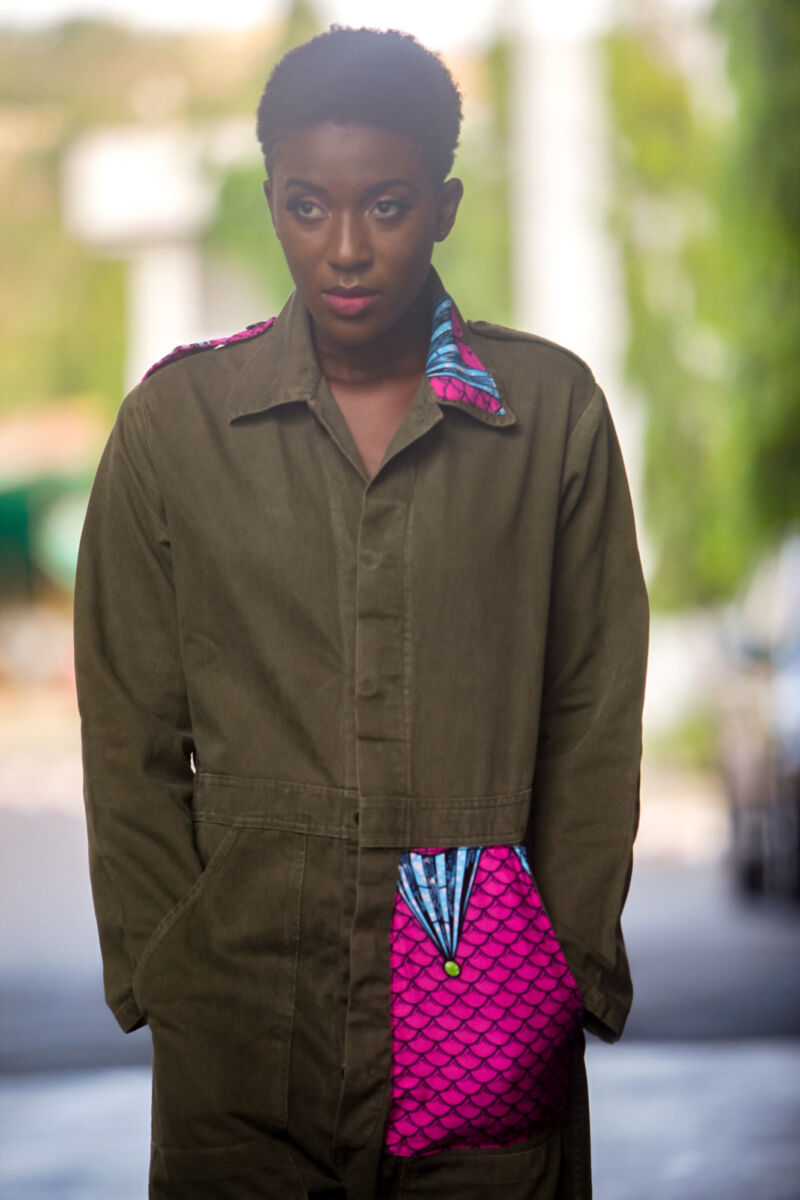
I embrace both British and African cultures, which is reflected in my designs. I use upcycled materials, limited batches, tailored geometric African and British prints. We reclaim unwanted materials from landfill. As a brand, we care for people and the planet. Local artisans are employed and paid a fair wage. We also donate one meal to the poor for each sale.
Is it challenging designing clothes from deadstock and limited materials, which vary according to finds?
It is extraordinary – so challenging. Rolls of fabric can be very short and you have to find creative and consistent ways of using small quantities. It is also hard to label deadstock, as they do not come with tags telling you for example what percentages of polyester are in the material. You also have to think about your carbon footprint and customs if you are ordering materials from further afar.
What have you found to be effective in terms of promoting your business?
Promoting the green collection on the runway, whilst bringing awareness to social issues. It sold out and then was featured in German Vogue and Fashion Africa 254. Then, I became known as the ‘upcycling, sustainable designer’.
You were deeply affected by the 2020 Black and Indigenous People of Colour (BIPOC) killings postings on social media, including the death of George Floyd, and you continue to be deeply concerned about ongoing global issues such as discrimination, rape and women’s rights. Would you say your brand is more than fashion and a representation of these views and a platform to raise awareness?
Yes. The whole hashtag of women supporting women, that new shift of identifying working women with families is important, because of all the juggling they do.
We all became more aware of the African-American and the black British plight following George Floyd’s death. This is a race issue, which has continued for many years and needs to stop. And then you have Africans doing it to other Africans. There’s partisanship in Africa and, where there are ranks, the lower ranks get trodden on. So I became an adviser of the organisation ‘Bias in African Fashion’. It exposes nepotism within Africa and the fashion industry. For example, where someone doesn’t get a place on the runway because they don’t know the right people, thus new designers don’t get a chance.
I also address issues creatively. My husband is German, and I have black African and mixed-race children. So I created my new ‘Queen Charlotte’ collection, the ‘Black Queen’.
How would you describe your collections?
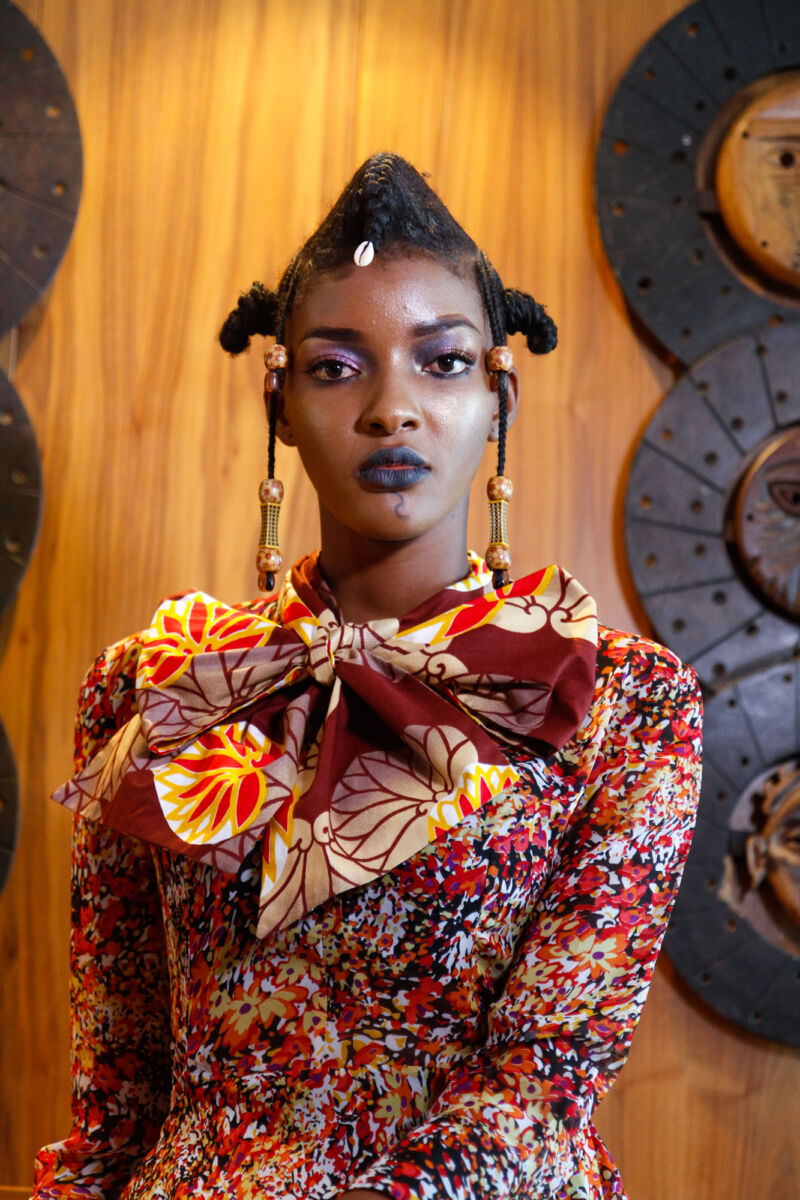
The Queen Charlotte collection is a fusion of African and European cuts. Elegant, simple, confident and timeless.
The Upcycled collection is ongoing. In Lome, Togo, we are obligated to save clothes from destroying the farmland and becoming landfill. So we upcycle these fabrics.
The Out of Africa collection exclusively employs local skilled workers and uses resident small businesses.
The Heritage collection is our ‘O’ dress. A one size elegant caftan for all, with expertly crafted embroidery. Typically made with African wax print. Proceeds from the ‘O’ dress go to causes that liberate women and alleviate suffering.
Would you say ‘Queen Charlotte collection’, AKA ‘The Black Queen’ collection, serves as a reminder to consumers to support black businesses and BIPOC? Who was the original Black Queen?
Yes, I wanted to speak with the white individuals who have always treated black people with grace, love and respect. Regarding the George Floyd story, they were calling these persons the ‘Allies’. I found myself receiving calls from various people during this time asking ‘how can we address this issue?’, and ‘I want to read and educate myself more.’ I had never heard that before, but I accepted their reaching out in this way as gracious and I wanted to say thank you.
Therefore, each style is named after a black woman married to a white royal, across the world. Your allies from noble households, where there was controversy about bringing black blood into the family, who still they went ahead. So there are wealthy white people who care about BIPOC. One of the first royals to be an ally was King George III when he married Queen Charlotte. Her family were of Arab and African origin. So these stories will bring another form of awareness to issues of race and bias that exist in Africa.
What empowers you daily? Your label’s motto is ‘fashion with passion and compassion’.
Society drives our sustainability. Using both, you can create things out of it. Our cobbler is disabled but upholsters the shoes on our website in the most magnificent way.
You see naked, mentally ill people on the streets everywhere here and you are thinking, ‘where’s the government?’ We’re getting second-hand clothing and we’re delivering them in batches to psychiatric hospitals. I also do a soup kitchen every Saturday.
I employ deaf seamstresses and also incarcerated basket weavers. We work with an organisation that provides basket weaving skills to inmates, to assist them in raising legal costs for hearings and to give them a trade on release. Some of these prisoners have never had a trial and cannot afford to do so. I visited them before the pandemic; their food is water. So many of them may die or become malnourished. Victoria Grace enables me to help others.
On Instagram, you have a video that shows you assisting a malnourished boy and his mother to get hospital treatment in Nigeria. You were also vocal about the alleged killings of 600 Christians in Nigeria. Has your faith been a motivator in raising awareness and being compassionate to others? How does it empower you and inspire you in business?
Yes, my passion and compassion from faith guide me.
For instance, at the beginning of the Victoria Grace journey, I went to the market. I saw a lady who was probably over 70, sitting by the kerb. Her fingers were arthritic from many years of working. I knew what she made that day would probably be spent on food and she wouldn’t have any savings to draw on. So I had a lovely chat with her, gave her clothes, bought some African fabrics and then I said to her, let’s do this together. She just lit up and you could see that in another life, she would have been a fashion designer. So we started putting these ideas together and I gave her autonomy to put herself into it. She told me the (minuscule) cost, but I said, ‘I will never pay you that, I will pay you a living wage for what you do.’ I registered for a runway show in LA that was coming up and I worked with her on it. I said to her that it would be my duty to make sure the world pays the right price and that we would make it beautiful, and that’s what we did.
God has given me the gift of talking. For years I wanted to be able to talk less, but the way God created you, you have to love yourself as you are. He then turned it to His glory. I have been invited to speak on sustainability next week in another country. I can use these platforms for His glory now and bring the world closer to the way He wants it to be.
How have you empowered and brought your local and diaspora community together through Victoria Grace?
If you achieve something, you can then mentor someone else or become part of a community, where you can have continued discourse. So I schedule meetings with community accountability partners. Victoria Grace is my ‘church’ also, as I can help others and bring communities together in a positive way through it.
What has been your proudest moment as a sustainable fashion brand owner?
My proudest moment was when I was travelling back to Germany with my husband and I got off the plane. A message came through that I featured in Vogue! Then I won the Black Beauty and Fashion Award (BBFA) for sustainability.
What can we look forward to in the future from Victoria Grace?
I know a disabled seamstress and we are looking to do a couture adaptive clothing service around the world. Made for and by a person with differing abilities.
Why should we buy from you?
We are ethical and are becoming a more sustainable brand. We believe being part of the solution to society’s ills and environment will positively impact uneven wealth distribution and restore human dignity. Our values include equity, respect and living wages.
You provide a free mask with any ‘O’ dress. You employ deaf female tailors and are an inclusive employer. Have you thought about creating a mask line for deaf people?
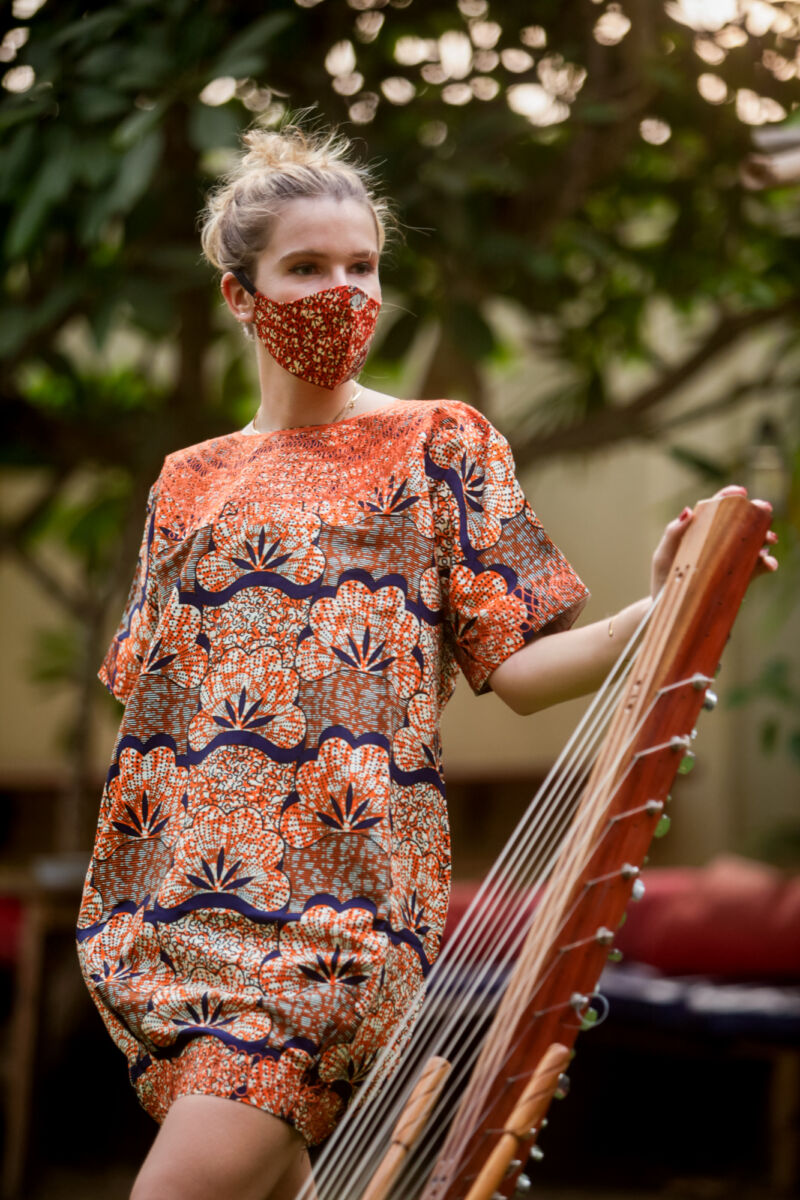
Well, I had to step back, because I realised in Western countries they could stop making clothes and start making tonnes of masks, and artisans here were already trying to sell their masks here – I didn’t want to take their business. So it’s a different dynamic; this was for their survival because they couldn’t make any clothes. So during the onset of the pandemic, I didn’t make any masks. Except that during the early days of lockdown, the discussion shifted onto what should do with our surplus. So I took my leftover fabric and went to an organisation where deaf ladies were imminently going to be unemployed. I worked with them and eventually they were able to hire more staff. They then used the waste to make masks, shoelaces and headbands.
How did you adapt your business to cope with the Covid-19 pandemic situation?
When you are an e-commerce business and everyone is on lockdown, you can still do it online. But you need to examine the data and analytics and continue ‘reaching’ your customers. You just have to make more of a splash rather than a drop in the pond, then you don’t have to write all the publicity. Also, manage your time effectively.
You are working on the capsule ‘Organic and Biodegradable Collection’. Tell us more about this.
Well, I want to be transparent and co-design it with the public. To co-operate with them on what are the best clothes for certain body types. To be clear about how organic and biodegradable the clothes are and the cost of them. To create staple pieces that people can be proud to own. I believe the collection will not be made in Africa, as I don’t want to import fibres and the fabric, but there may be elements of it where you could incorporate natural food waste dyes. The story will be in the fibres.
What do you love about being African?
Being connected to my culture, the people, landscape, weather and food. Emotions can be expressed explicitly. An African always carries inner dignity and strength, such as at airports when BIPOC are often pulled aside. Beauty is appreciated universally without pretence. Lastly, freedom to honour God without mockery or discrimination.
What three pieces of advice would you give to aspiring entrepreneurs?
- In this business, you are always going to get people who try to mirror and compete with you.
- If your faith or beliefs aren’t directing you in this area, you will get exhausted. You can’t try to nurture people like ‘Mama Benjamin’ (See Mama Benjamin on the Victoria Grace Instagram stories) and others, whilst running a business on individual strength.
- There will always be trials and hurdles, you just have to keep going.
Jennifer and her brand are making an active pledge to be more sustainable in Togo. Learn more about other African sustainability heroes here. How can we the Diaspora create an impact globally? Comment below, then explore the wide range of sartorial treats at Victoria Grace.


