


Perhaps the most beautiful aspect of Ethiopian food culture is its approach to food: food is not merely a form of sustenance but is emblematic of community. The communal element finds expression through food ceremonies (eg the highly choreographed Ethiopian coffee ceremony or bunna) and in the intimacy of the shared dish. Important too is the process of cooking: the long-simmered stews take time to prepare, but it is that time that allows the ingredients to meld into a sumptuous alloy of textures and flavours. Ethiopians take their time over the process of eating, too, savouring every moment of this communal aspect of their culture to enjoy and appreciate both the food and one another.
Although Ethiopia’s staple foods are not particularly exciting in and of themselves: onion, carrots, potatoes, cabbage, and beetroot – Ethiopian food boasts diverse flavours that have made the country one of the most important gastronomic hotspots on the continent. The rich and nuanced flavours of many Ethiopian dishes are in large part due to berbere (a spice mix), a mind-boggling alchemy of over 20 different spices.
The foundation of the majority of Ethiopian dishes, the heart of Ethiopian food, is injera (or njera, injeera). Injera, a spongy flatbread, is made from tef grain (the much-heralded, smallest grain in the world) and has the open-honeycomb structure of tripe and an ever-so-slightly rubbery texture. Authentic injera is gluten-free and has a brownish colour, but due to the limited availability of tef (and its high price), gluten is often added, changing its colour somewhat. Injera is all things to all men: a food, a utensil, a plate, a uniter of Ethiopians. A variety of food is served atop the injera until it resembles a work of food art, and diners use extra accompanying rolls of injera to scoop up ladled helpings of assorted wats (stews/sauces) – from mounds of spicy meat stews to moreish lentil curries, washed down with Ethiopian beer or tej (an alcoholic fermented honey beverage).
Try these traditional Ethiopian foods, or make them yourself.
- Doro Wot (Ethiopian chicken stew)
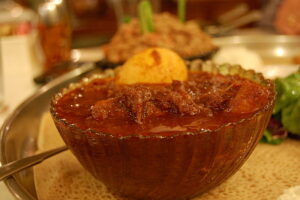
Doro Wot is an important Ethiopian meal that is typically served on national and religious holidays (perhaps because it takes hours to prepare!). It is essentially chicken drumsticks (or/and chicken wings) served in a rich and complex stew that’s made with butter, onion, chilli, cardamom and berbere – with a hardboiled egg or two tossed in. Try this recipe
- Shiro wot
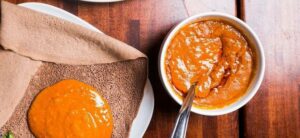
This beloved Ethiopian dish is made of ground chickpeas in a spiced, stew base. The result is a rich, textured, nutty flavour. Shiro is usually eaten on fasting days (Wednesdays and Fridays). Try this recipe
- Tibs
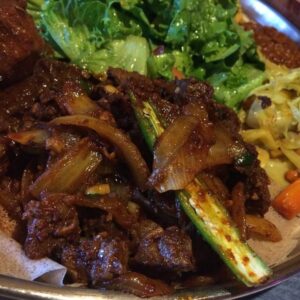
Tibs is one of the most popular Ethiopian dishes. Strips (or cubes) of lamb or beef are pan-fried in butter, garlic and onion. Try the wonderful chef Marcus Samuelsson’s recipe.
- Ti’hilo
This is a specialty of the Tigray, north of Ethiopia. The eating of ti’hilo comes with some ceremony – balls of barley are prepared in front of you and then placed onto the injera, ready for you to dip into the accompanying rich, delicious sauce. Try this version below.
- Kitfo (featured)
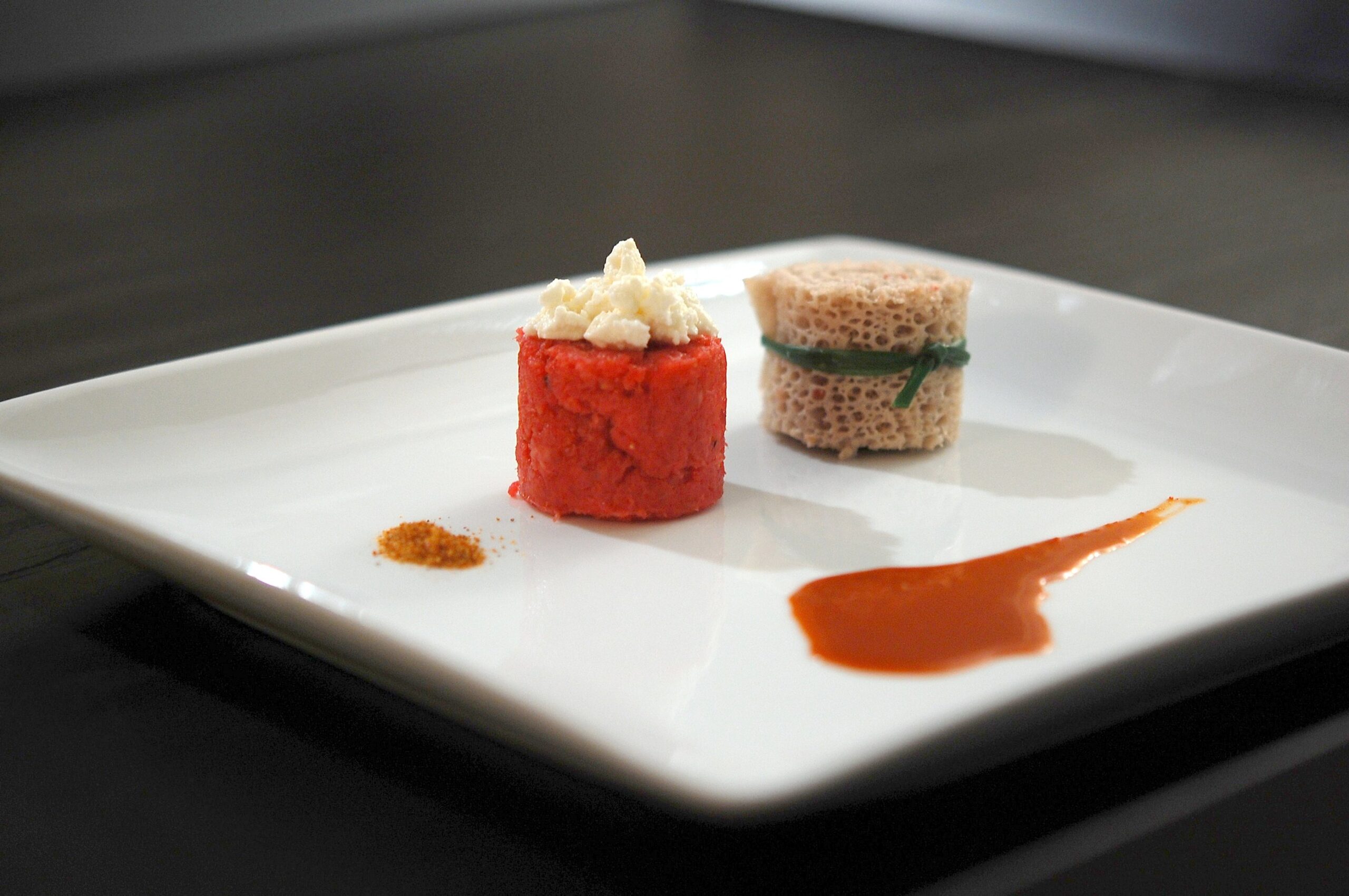
Ethiopia’s equivalent of France’s steak tartare, kifto originates in the Gurage region of the country. Boneless lean beef such as sirloin is very finely chopped and flavoured with a fiery spice mix called mitmita. It is then warmed in a pan with spiced, clarified butter. Ethiopians often eat their kitfo with aib (dried cottage cheese); another popular accompaniment is gomen (spinach).Try this recipe
- Tere Siga
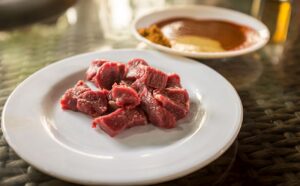
Another of Ethiopia’s delicacies is tere siga, essentially cubes of raw red meat, eaten with the obligatory injera and then dipped into lots of flavourful mitmita. Adventurous eaters will probably enjoy this; if you are of a timorous bent, perhaps sit this one out.
- Pasta beau injera/siga
Although Ethiopia is considered never to have been colonised, it was invaded by Italy in 1935-36, after which Italian settlers arrived. The deposed Emperor Haile Selassie regained his throne a few years later but Italian resistance was not defeated until towards the end of 1941. Ethiopia retains vestiges of Italy’s involvement in the country.
Pasta beau injera might horrify Italians but nonetheless remains popular with Ethiopians. And yep, it’s injera with pasta. Pasta beau siga is pasta with meat – it’s Ethiopia’s version of spaghetti Bolognese.
Another marker laid down by the Italians is coffee – strong, dark, rich and full of flavour, coffee is drunk throughout the day in Ethiopia.
What else should be on this list? Let’s have a conversation below.


