South African born Tia Oguri is the owner of Uber Dandy Kimono. She is a self-taught kimono collector, stylist, and designer based in Oxford, England.
What inspired your passion for Japanese kimono?
I used to watch a lot of Japanese historical dramas and I was extremely impressed with how kimono changed with seasons and occasions.
There are a few different kimono, which are your favourite?
I mainly wear kurotomesode (worn by married women) and anything with a Noh mask motif. I have a bright solid yellow kofurisode. I love it as it is the colour of the sun. My most extravagant kimono is a red and black wedding uchikake.
How long does it take to learn how to wear a kimono?
Tricky question as there are many factors to consider. A basic yukata requires about a month of daily practice. However, it can take a lifetime to master wearing formal kimono. I have been wearing kimono for over 10 years and at times I feel like a complete beginner.
Where do you wear kimono?

I wear kimono wherever I fancy, this could be to work, a day trip into London and to weddings.
What is your greatest styling accomplishment?
I co-directed a 2-season fashion shoot with Emmy award winning cinematography company Arri.
Can you tell us about your African print collections?
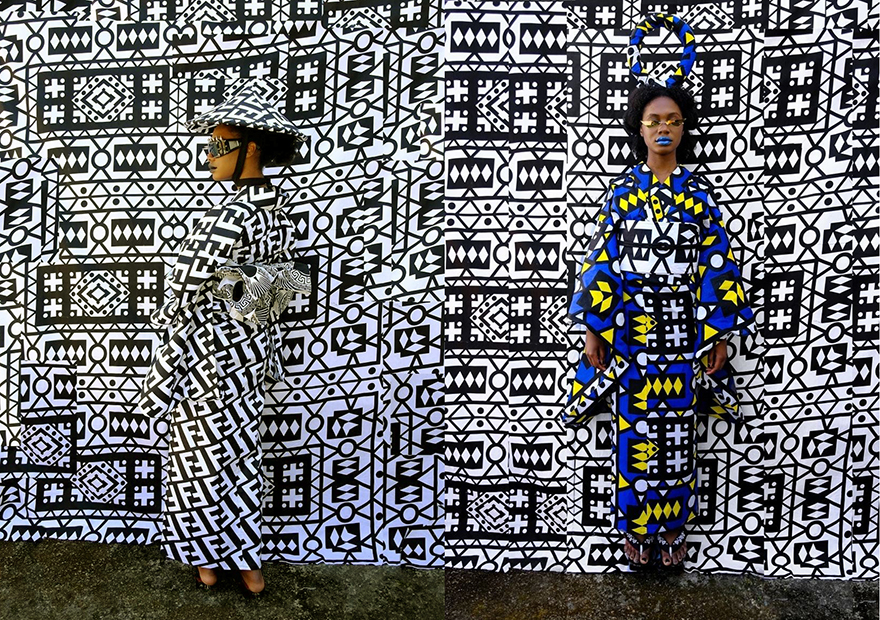
Amazwe collection is inspired by afrofuturism and designs across cultures. Amazwe, in isiZulu and Ndebele means ‘nations’. I use bold African prints from South Africa and Angola with Japanese rice farming hats and futuristic sunglasses.
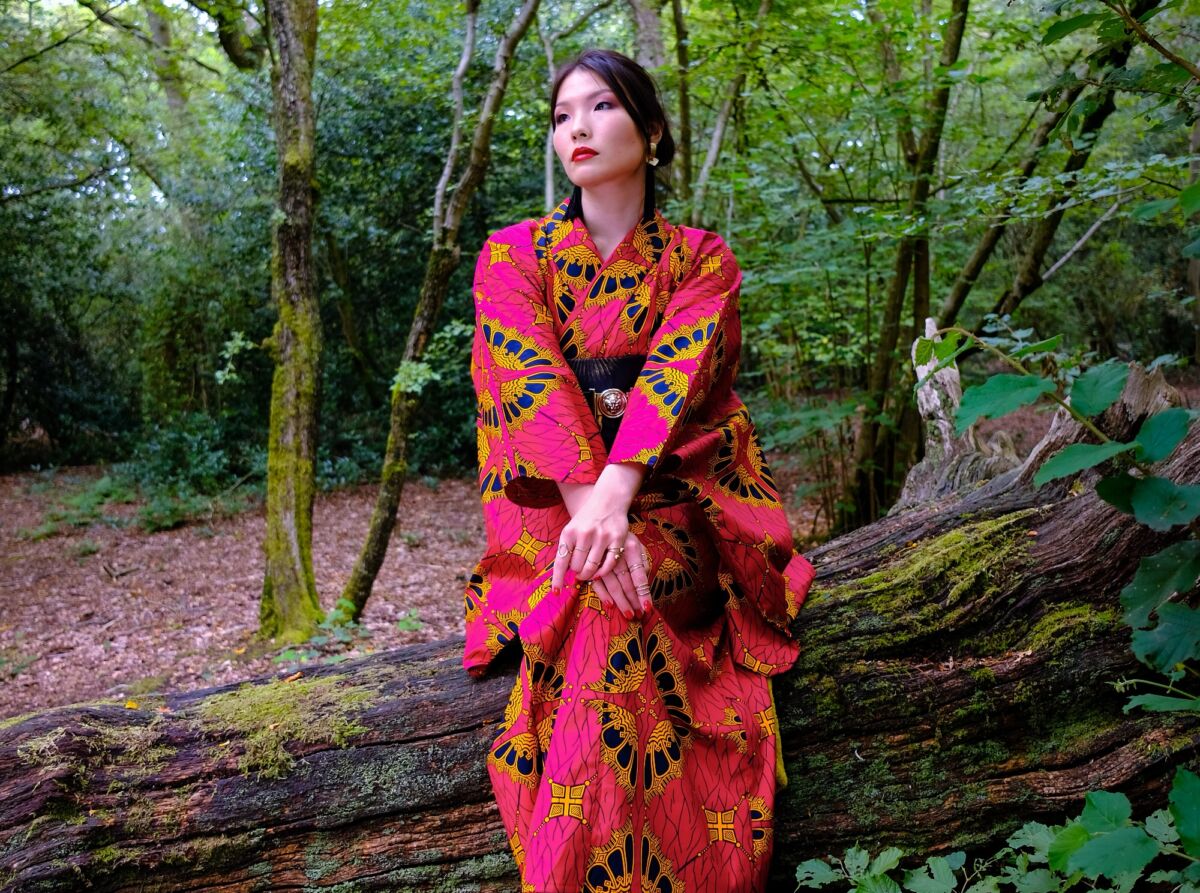
Nkechi collection is a modern take on Baroque style. The collection uses mainly Nigerian Ankara prints.
As well as a stylist, you are a creative director and photographer, where is your dream location in Africa for a photoshoot?
Definitely has to be in a township. My aim is to make kimono accessible to all. For my kimono ensembles I always choose affordable fabrics and accessories to enable anyone to wear kimono with ease.
You have showcased your African inspired Kimonos on Japanese television, can you tell us about your experience and the response?
View this post on Instagram
This was one of the most humbling experiences of my life. NHK TV covered London’s kimono scene and the V&A museum’s Kimono to Catwalk exhibition.
I wore an African Samakaka print with a headwrap. Fans that were watching it live in Japan began messaging me on various platforms.
What can we expect to see from your business in the future?
In the fashion industry, being an ethical business is important, I champion paying the living wage. My next goal is to ensure my brand is sustainable.
What three pieces of advice would you give to aspiring entrepreneurs?
Explore and experiment!
Learn
Enjoy what you do
What advantage do you think your identity as an African brings to your business?
My African identity has enabled me to add my own twist to kimono. It shows that anyone can go after what they are truly passionate about.